Attending academic conferences is simply part of conducting and sharing research into improving the learning environment. Over the past few years, I have often used Zoom to join my colleague who has taken the time to travel to the conference. Most often we have simply added this virtual function to our presentations and since I have been working fully online since 1995 being brought in via some form of video-conferencing tools has been what I have been doing for over two decades. Quite often session the moderators are simply surprised by how easy it is to have someone join the session virtually.
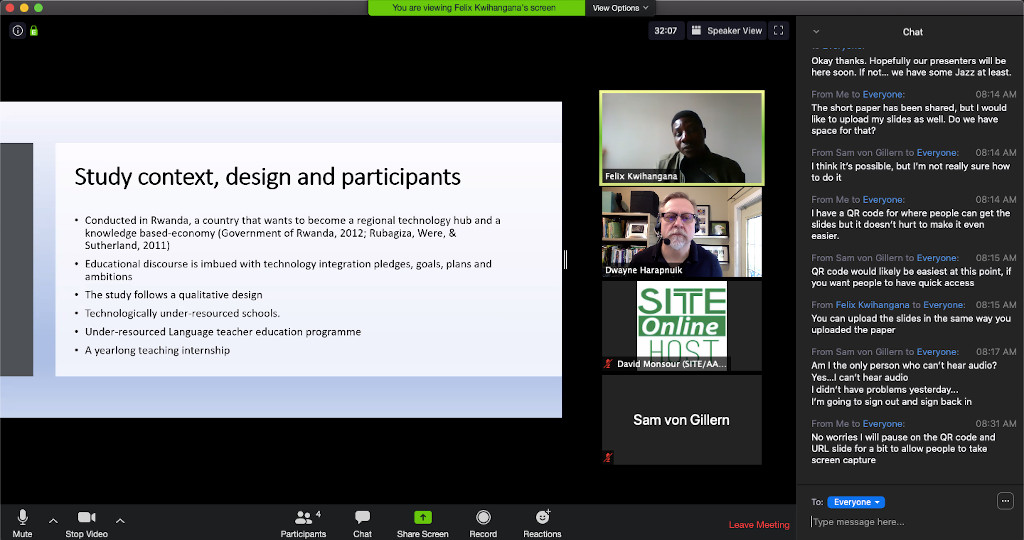
Due to the coronavirus pandemic I was able to attend the SITE conference fully online via Zoom and did a presentation on the paper Graduate Students’ Perceptions of Factors that Contributed to ePortfolio Persistence Beyond the Program of Study. Other than a few minor glitches in getting their slides screen shared all of the academics in my session were able to present without any major problems. Yes, some will point to the fact that OLC and other organizations have offered a virtual attendance option for a couple of years now.
Makes one wonder if we will ever go back to the way that is was where we have to spends dozens of hours and hundreds or even thousands of dollars to present. Yes, there is the serendipity of large collaborative environment but as we are seeing with the lock down or stay in place situations there are other ways for us to communicate and collaborate. I have to admit I didn’t miss the 2 hour trip via bus, seabus, and then train to the airport. I didn’t miss the long lines and the hours of waiting to check in and get through security. I didn’t miss the jet lag or the cold that I always seem to catch from a sick passenger that I sat next to on the plane. I didn’t miss the taxi or shuttle bus ride to the hotel or conference center. This morning I logged onto the system 15 minutes early, ran a last minute test on my audio and video, and waited for the rest of the conference participate in my session to join. Everyone was on time, each session stayed within the allotted time, and the Q & A session was as good if not better then in many face2face sessions I have experienced. Yes, I do miss the chance meetings of colleagues I haven’t seen or simply experiencing the power of the crowd, but this morning presentation and session was much more efficient, less costly, and still a really good experience. To answer may own question at the start of this paragraph…I liked the virtual conference experience and I wouldn’t mind if we do not go back to the way that it was.
One more thing it is also easier to share my conference files online – go ahead and download a copy of the paper that we submitted and the slide deck I used this morning.
Enjoy!


