Archives For Learning

Jenn Cross highlights three ways that common sense leads us astray:
Myth 1: Education will change behavior.
Myth 2: You need to change attitudes to change behavior.
Myth 3: People know what motivates them to take action.

Myth 1: Education will change behavior.
Most people think that if people just know about an issue, they’ll change. But knowing is not enough, says Cross. HOW we present information matters greatly. She says, for example, that the message has to be tangible and personalized.

Myth 2: You need to change attitudes to change behavior.
Cross notes that attitudes actually FOLLOW behavior. She says that if we survey people about attitudes, it won’t accurately predict behavior. Thus it’s important to set behavioral expectations and connect them to values that resonate with our audience(s).

Myth 3: People know what motivates them to take action.
Cross says that we think we know what motivates us, but we don’t really know. She notes that one of the greatest motivators is social norms. If we see someone doing something, we’re more likely to do it too.

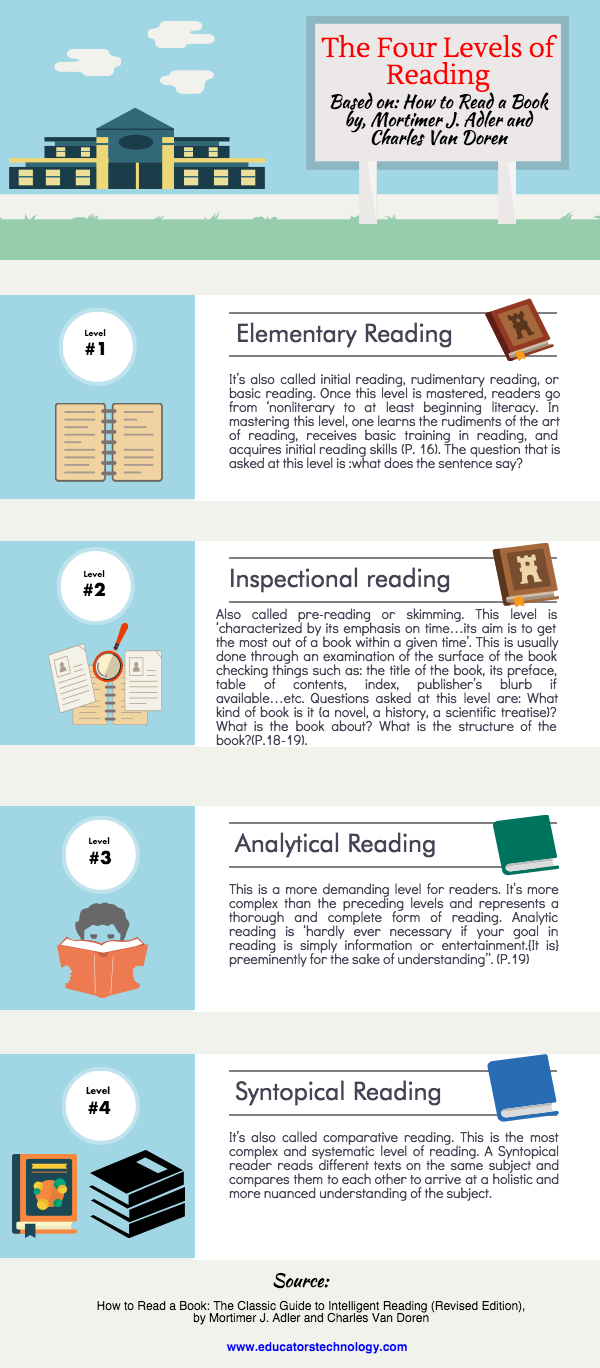
Source: https://www.educatorstechnology.com/2016/01/the-four-levels-of-reading-every.html

Mortimer Adler and Charles Van Doren’s 1940 classic How to Read a Book emphasized the four main levels of reading: elementary reading, inspectional reading, analytical reading, and syntopical reading. The book provides everything a learner needs to know and do to progress through and fully function at all levels.

References
Adler, M. J., & Van Doren, C. (1972). How to read a book: The classic guide to intelligent reading. New York, NY: Touchstone.

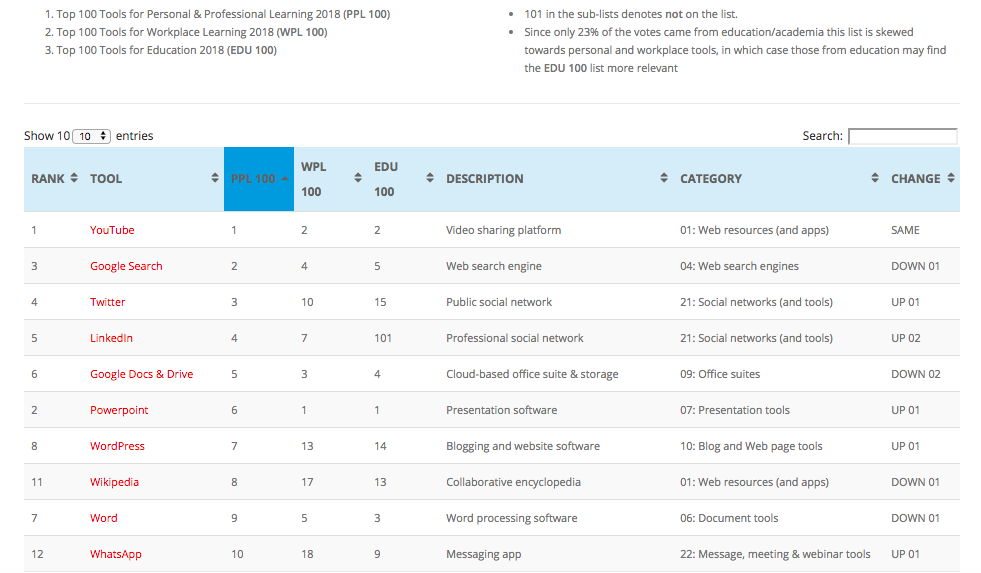
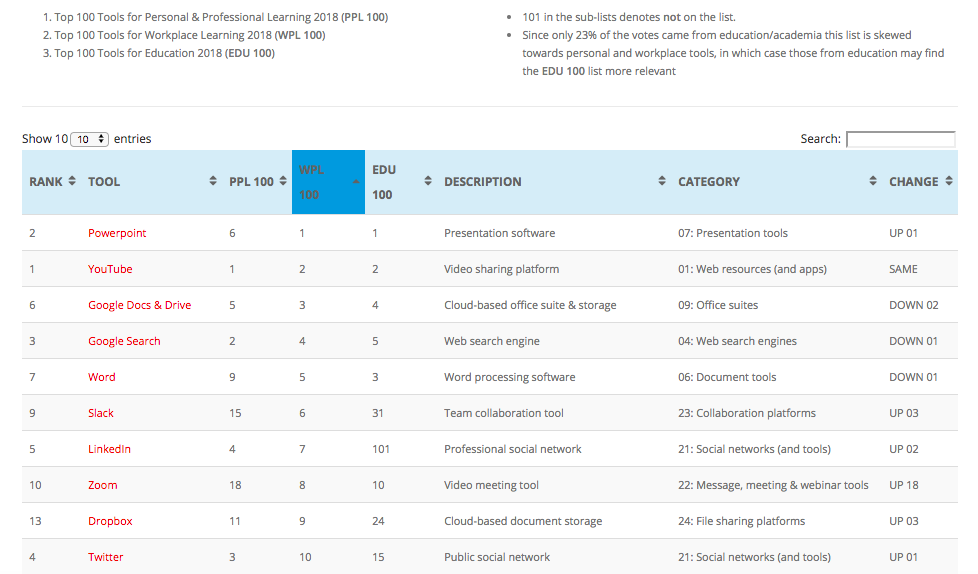
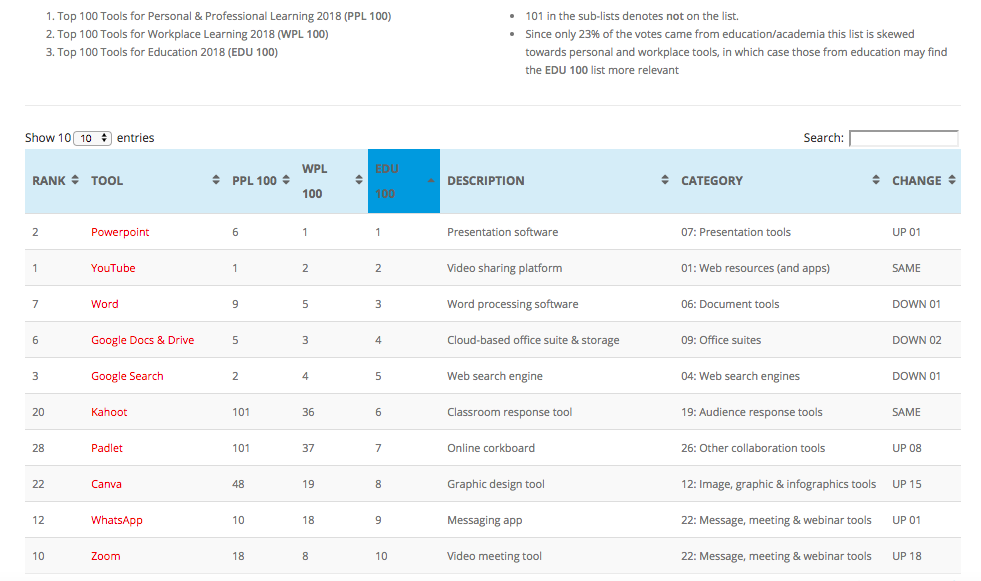
Jane Hart has been compiling a list of the Top Tools for Learning for the past 12 years. The results of the 12th Annual Digital Learning Tools Survey, confirms that sharing information is still a big priority for educators with their top-ranked use of Powerpoint, Youtube, and MS Word. A refreshing development is that web-based communication tool Zoom has moved up 18 places to the 10th spot just behind WhatsApp which also suggests that educators are finally starting to use digital tools for communication and collaboration and not just for finding and distributing information.

The following screen captures show the Top Ten places for the Top 100 tools for Education 2018 (EDU 100), Personal & Professional Learning 2018 (PPL 100), and for Workplace Learning 2018 (WPL 100).

Go to the full Top Tools For Learning 2018 list