The Human Mind is a Story Processor, Not a Logic Processor

For sale: baby shoes, never worn.
—Ernest Hemingway, 1920

Whether or not the short and impactful six-word story was penned by Hemingway there is no denying that it evokes a great deal of emotion. It is almost as if there is something in us that makes a connection beyond the six simple words that we read.

Jonathan Haidt argues that “the human mind is a story processor, not a logic processor.” (p. 328). Haidt points to the work of the psychologist Dan McAdams who is recognized for identifying that we each have a story of ourselves that we use to reconcile our place in the world. McAdams argued that psychologists must connect the qualitative data that they gather on their clients with the qualitative perspective of the narratives that people use to make sense of their lives.

We go to movies, binge watch TV series on Netflicks, read fiction, and sit around the campfire listening to our friends and families stories because we just like stories. Why? In their essay Knowledge and Memory: The Real Story, Roger Schank and Robert Abelson argue that “stories about one’s experiences, and the experiences of others, are the fundamental constituents of human memory, knowledge, and social communication” (p. 2). They posit:

  1. Virtually all human knowledge is based on stories constructed around past experiences;
  2. New experiences are interpreted in terms of old stories;
  3. The content of story memories depends on whether and how they are told to others, and these reconstituted memories form the basis of the individual’s “remembered” self”.

Connecting new experiences with old experiences or in this context “old stories” is central to the notion of making meaningful connection which is foundational to the constructivist definition of learning. Stories help us to make meaningful connection which means that stories help us to learn. We can use stories in our learning environments in several ways of key ways. The most effective way is to create a significant learning environment in which a learner is given choice, ownership, and voice through authentic learning opportunities. This referred to as the CSLE+COVA approach and The authentic learning opportunity or a real-world problem that the learner chooses to resolve can provide the story and the context for learning because it requires that learner to face a sequence of real-world situations. As the learner works through the real-world or authentic learning opportunity they are challenged to develop knowledge, skills, and abilities that are necessary to address the challenges that the authentic learning opportunity present.

If an authentic learning opportunity is not available then using Roger Schank’s Story-Centered Curriculum (SCC) is the next best option. SCC is a:

carefully designed apprenticeship-style learning experience in which the student encounters a planned sequence of real-world situations constructed to motivate the development and application of knowledge and skills in an integrated fashion. A realistic story, at the core of each SCC, provides a meaningful, motivating role for the student, designed to ensure that the student faces exactly the right progression of challenges to stretch and build his or her abilities (Shank, 2007).

While the SCC can provide an effective simulated model the power of choice, ownership and voice will have a more significant effect on the transformative effect of the learning and should be the first choice. This is especially important if we want to have a lasting effect and really enable our learners to learn how to learn and not just work through a simulation.

Stories help us to make sense of the world around us and enable us to make the meaningful connections that can help us also make sense of our lives. It only stands to reason that stories that will come from real-world or authentic learning opportunities will also help us make meaningful connection and help us to learn. Are you taking advantage of this in your learning environment?

References

Haidt, J. (2012). The righteous mind: Why good people are divided by religion and politics. Pantheon, New York.

McAdams, D. P. (1993). The stories we live by: Personal myths and the making of the self. Guilford Press.

Schank, R. C. (2007, April). The story-centered curriculum [Blog]. Retrieved from https://elearnmag.acm.org/archive.cfm?aid=1266881

Schank, Roger C. & Abelson, Robert P. (1995) Knowledge and Memory: The Real Story. In: Robert S. Wyer, Jr (ed) Knowledge and Memory: The Real Story. Hillsdale, NJ. Lawrence Erlbaum Associates. 1-85. Retrieved from: http://cogprints.org/636/1/KnowledgeMemory_SchankAbelson_d.html#fnB0

Authentic Learning Leads to Authentic Adventures

Endless Goes to South America
https://www.endlessbiking.com/eb-culture/2018/3/11/endless-biking-head-to-south-america

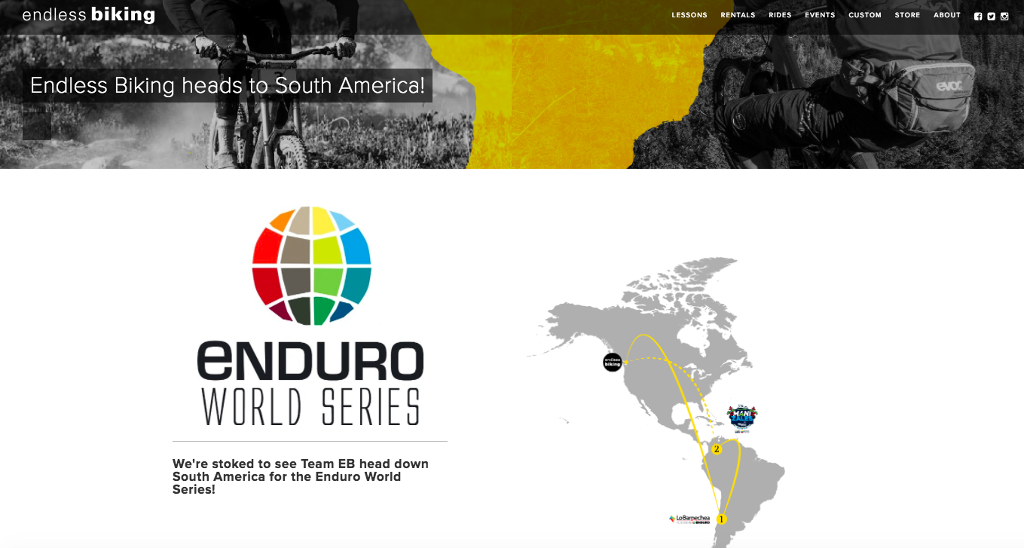
My son Levi is a sponsored Pro rider with Endless Biking, Rocky Mountain Bikes, Fox, Shimano and several other companies and is currently in Chile South America preparing for the first race in the Enduro World Series (EWS). Levi and his teammate Anthony will be Farellones Chile high up in the Andes in the next few days to get used to the altitude and prepare for their first EWS race of the season. They then head up to Manizales Columbia where the second EWS race will not only take them through the mountains but also through parts of the city.

The hard work and perseverance that comes from years of dedication and preparation are starting to pay off. The authentic learning experiences that Levi grew up with have prepared him to take on these intense challenges and I can only imagine what this and his future adventures will bring and what lessons will be learned.

You can follow Levi’s and Anthony’s adventures at @leapinlevi, @pocketpieman & @endlessbiking!

Reading, Watching, & Listening

I often get asked what I am reading, watching or listening to. Another question I get is how do you manage to find the ideas that you do. Perhaps by addressing what I am reading, watching and listening to I may be able to answer both questions.

My interests in what I am reading, watching and listening to are continually changing so I am going to have to revisit and update this page on a regular basis.

Reading
Rather than re-create my GoodRead lists you can see what I am currently reading, what I plan to read and what I have just read on the side menu of my site. I learned to read before attending school as a child and due to discipline problems in elementary school I spent more time in the library reading and exploring the early media of the day then I did in the classroom. I kept on reading throughout my teenage years and I also read continuously from the time I dropped out of high school until I returned to school more than 10 years later. As an undergraduate, I majored in the English, Philosophy, and Theology so you will often see books on theology and philosophy appear in my GoodReads list. It was also during my undergraduate studies that I was exposed to Mortimer Adler’s How to Read a Book and his “Great Books” list and I have been slowly working my way through this list of 164 great books. You will often find a book from this Great Books list in my list of books I reading or planning to read. As more and more of these classic books find their way onto Audible or Libravox I am now able to listen to some of these books. I am in the process of building a recommended reading list but this is taking me much longer than expected because there are just so many good books to read.

In addition to reading many books, I am continually reading the latest research in on many different subjects and since I am a fan of primary sources I spend a great deal of time reading a wide assortment of articles. I also subscribe to many different blogs, magazines/ezines, and news sites so there is no shortage of interesting things to read. These contemporary sites provide a constant stream of new ideas. I have always been intrigued by new ideas so it is not uncommon for people to email or message me and say — hey have you seen or read this? For example, I have to thank my older son Levi for sharing the episode On Average on the site 99 Percent Invisible. It was through this post that first learned about Todd Rose’s book The End of Average which has effectively busted the myth of average.

YouTube & Websites
I also think it is important to acknowledge that I am in a constant pursuit of knowledge and that can come from many different perspectives. I think Eric Weinstein who referred to the Intellectual Dark Web on the Dave Rubin’s youtube channel summarizes the importance being willing to explore all kinds of ideas from a variety of perspectives:

The Intellectual Dark Web –

The following are some of people or sites I observe on YouTube or on the Web. Please note that I used the term observe rather than follow. This is a very important designation because I believe that you can observe a person’s site, or a channel and not have to endorse, support or commit to their beliefs or ideology. When you follow an individual there is a tendency to accept their position or beliefs. I am very selective in what I believe and follow so the distinction between observe and follow is very important. Therefore, I like to stay at the state of observation which enables me to explore diverse and contrary ideas. It is also important to note that I look into the people or organizations that I follow enough to be fully aware of what they stand for or believe. I will also go as far as lot look into the criticism of an individual or site to make sure that have a balanced perspective. Finally, it is important to note that some of these are links to YouTube channels and others are links to the individual’s site or the organization they most often represent.

I must reiterate that the inclusion of the following sites is not an act of affirmation of the site or person’s belief or position — I am simply observing the ideas expressed.

TED
The RSA
Big Think
99 Percent Invisible
TED-Ed
Veritasium
Crash Course
SciShow
SciShow Psych
It’s OK to Be Smart with Joe Hanson
Ben Shapiro & The Daily Wire
Noam Chomsky
Douglas Murray
Jordon Peterson
Joe Rogan Experience – Language warning!
Dave Rubin – The Rubin Report
Christina Hoff Sommers – Factual Feminist
Philip DeFranco  Language warning!
ReasonTV
Abby Martin – Empire Files
The Young Turks – Language warning!
Potholer54
John Lennox
CorbettReport
Global Mountain Bike Network
Marques Brownlee – MKBHD
Red Bull
2 Cellos

Many the above YouTube Channels and individuals have a podcast option so rather than duplicate individuals or sites I will simply point to what else I listen to in the podcast format. If a YouTube channel doesn’t have a podcast option and I want to listen to particular series or video I will convert the video to mp3 format and listen to it on my iPhone.

EconTalk
The Classicist with Victor Davis Hanson
Waking up with Sam Harris 
Tell me Something I Don’t Know
Defenders Podcast
Optimize with Brian Johnson
Accidental Creative
Dan Carlin’s Hardcore History
Ben Greenfield Fitness

I also listen to many books in audio format via Audible or Libravox and I will often get a book in audio format from a local library.

As I stated earlier I will be reviewing this list on a regular basis and will be adding or removing entries.

The Power of Deliberate Practice

My son Caleb has been training for the 2018 DownHill Mountain Bike racing season and since it is his first year to compete as an Elite or Pro racer in the BC Cup and NorthWest cup he has been putting in some extra effort. He is also planning on competing in some Freeride competitions (Downhill plus stunts) so he is also working hard to add some new stunts to his repertoire of skills. I am always looking for ways to support Caleb’s training so I was planning on taking him and a few of his training partners out to do some training runs on one on one of the mountains on the North Shore the other day but the weather did not cooperate. We woke up to about 6 inches of snow and since we live at the base of the mountain you can imagine how much more snow there is as you go up in elevation.

Snowy Morning
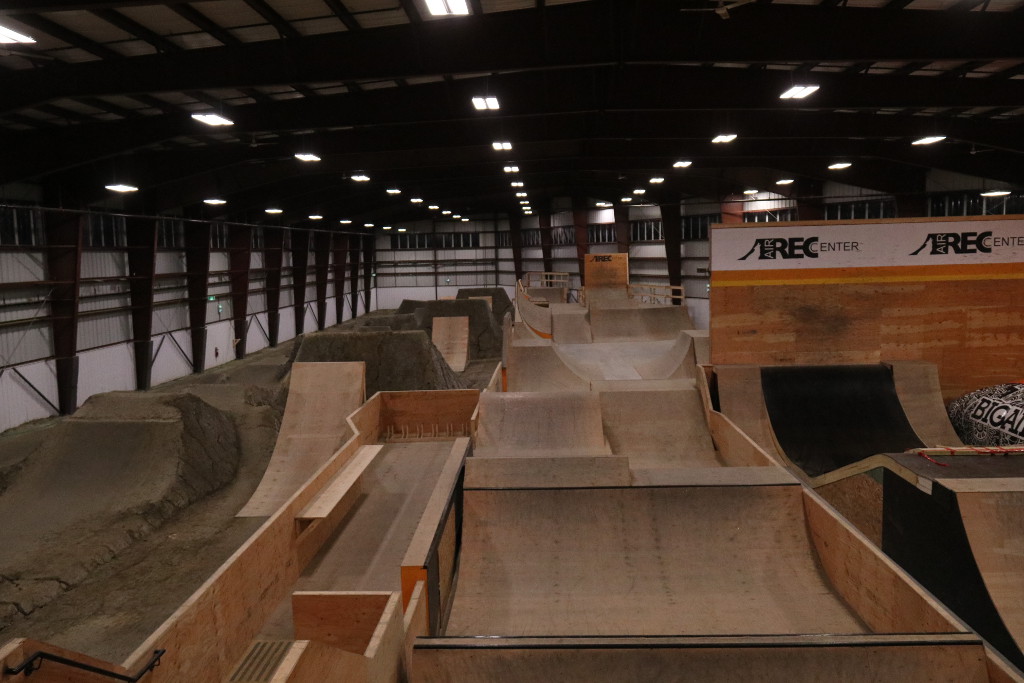
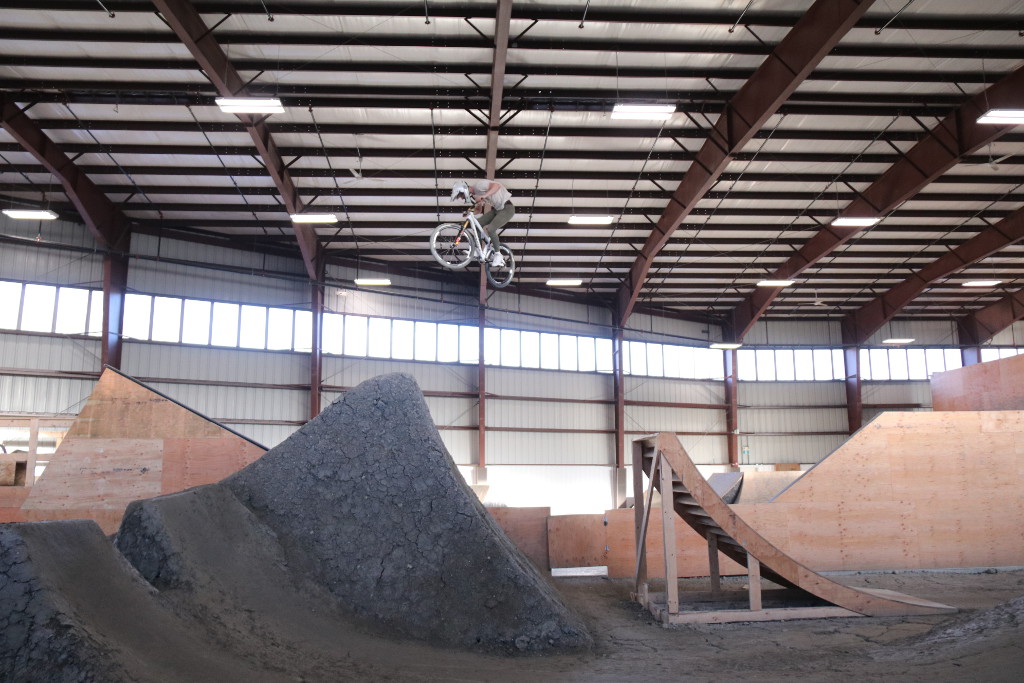
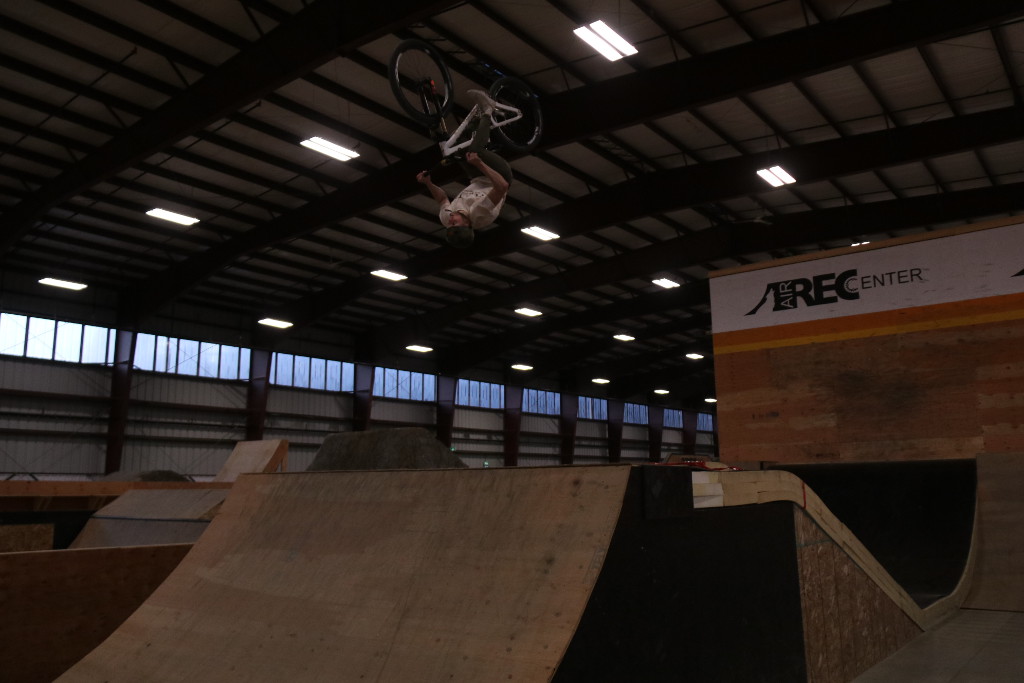
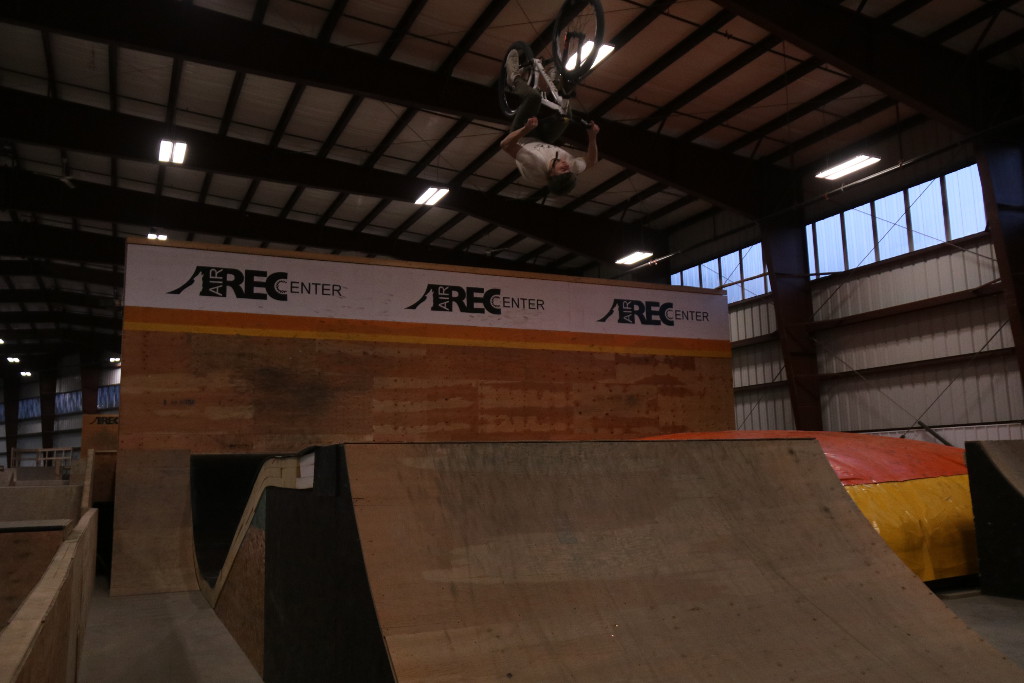
An advantage of living in one of the most Mountain bike rider friendly locations in North America is that in addition to some of the best outdoor riding locations we also have indoor training facilities. Caleb and I spent the afternoon at the AiReCenter in a neighboring community. The following pictures reveal the scale training facility and the intensity of Caleb’s training:


In addition to major wooden features, the facility has 3 full lines of dirt jumps including a Pro Line with wooden kickers (launch ramps).

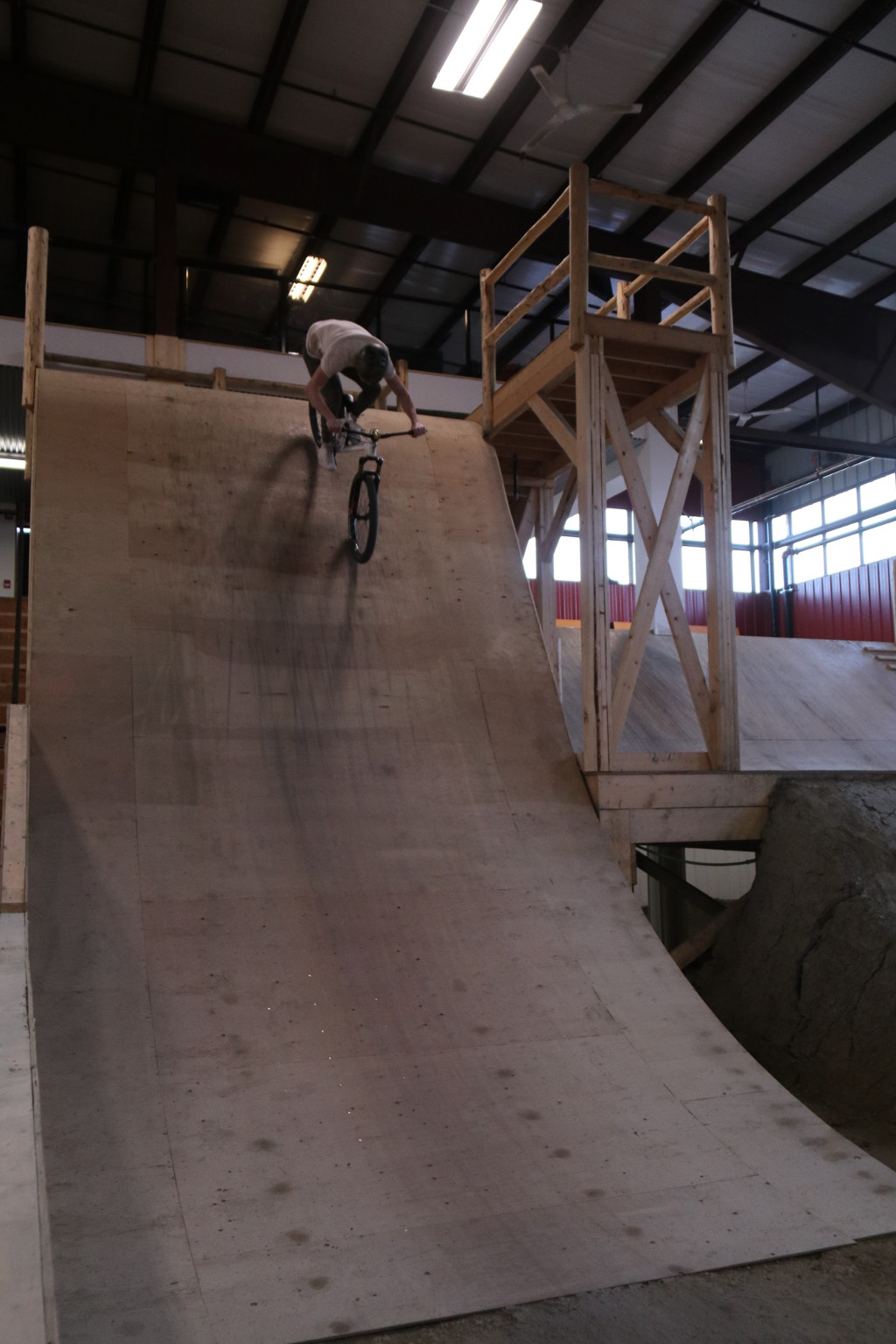
The following starting point/ramp should give you context for how big and intense the facility is:

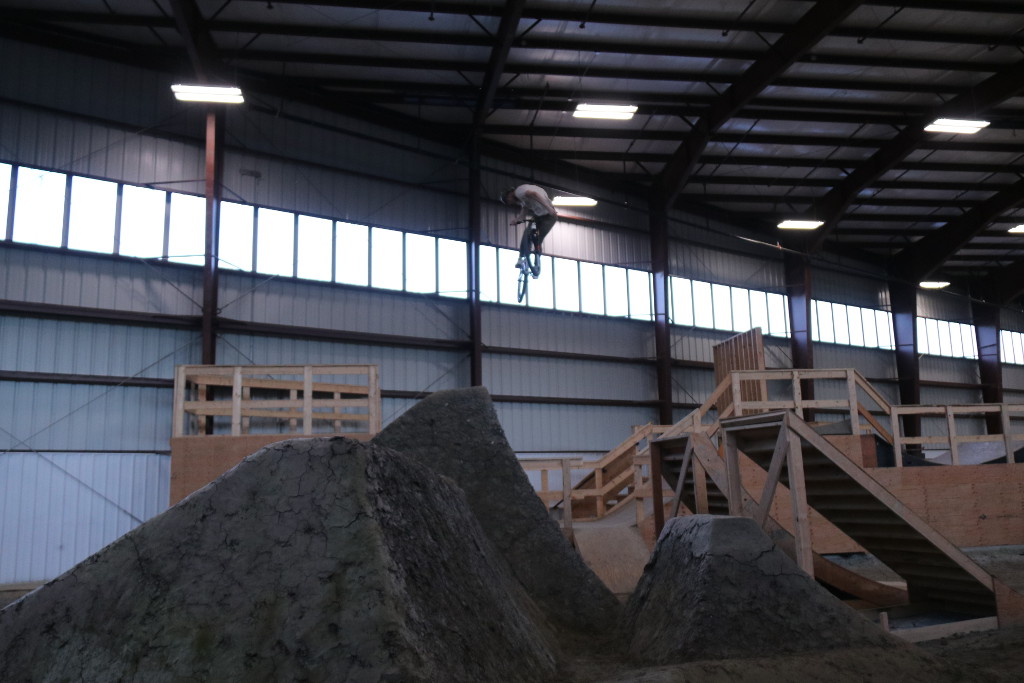
The Pro Line dirt jumps are a great place to practice tailwhips, flips and many other stunts that Caleb will be using in FreeRide competitions:

Fortunately, one can practice backflips on the airbag or on a smaller ramp setup before doing the stunts on the dirt:

So what does Caleb’s training for his upcoming season have to do with learning? Or perhaps a better question is what can we learn about learning from Caleb’s training experience. The 20 hours a week of indoor training at the AiReCenter can be directly applied to Freeride but many of the bike control skills can also have a positive impact on racing. For example, a DH Racer spends a significant amount of time making split-second adjustments while in the air or as they skim the surface as they are propelled over the trail. The continual adjustments that Caleb makes as he repeatedly hits the dirt jump lines or performs black flips, tailwhips, and other stunts are very similar to the adjustments that he has to make in real time on a race or Freeride course. The better the bike control a rider has the more confident they are and the better equipped they are to deal with the challenges each unique course has to offer. The fastest racers also the best riders so the more diverse a rider’s skills the better they can perform in a race or Freeride course.

One of the most important lessons that Caleb has learned this past year in training and that we can also learn from is transfer. Being able to move from theory to practice or more specifically being able to apply knowledge or a skill from one instance to another is a crucial aspect of transfer. The skills and confidence that Caleb builds at the AiReCenter are transferable to his regular training runs and ulimate to his racing. In the next few weeks, Caleb is planning to move off his dirt jump bike and onto his DH race bike at the AiReCenter to practice his backflips and tailwhips so that when he is riding on the actual trails he can perform these stunts with greater confidence and ultimately limit the risk of injury. Downhill Racing and Freeride are rightly called extreme sports because the riders are always on the verge of serious injury. Reducing the risk of injury is so important to the long-term success of the rider and to the peace of mind of the rider’s parents.

On our way home from the AiReCenter Caleb informed me that he is ready for this upcoming season and is feeling very confident in his ability. The additional 20 hours a week of indoor training he has added to all this other training is paying off and in another three months when the season starts Caleb is confident that he will be best prepared he has ever been. He is also recognizing how important it is to build his skills slowly through consistent deliberate practice. He is breaking down each aspect of his stunts and is working on each component to make sure that he has addressed all the necessary factors. The continual and repetitive aspect of performing on the edge of one’s ability and then making slight but cumulative adjustments is the essence of deliberate practice. Making those small and cumulative adjustments are what separates the experts from the amateurs and in the case of extreme sports, it is what will keep an athlete out of the hospital–which is also a good thing for the athlete and his family.