Regardless of where you land on the Covid pandemic, the past several years have confirmed that there is a tendency for groups of people to act in a very similar fashion. Why? In the book, The Psychology of Totalitarianism, Mattias Desmet the Professor of Clinical Psychology at Ghent University argues that the manipulation of individual and collective emotions such as fear, hope, and optimism/pessimism can become amplified in groups, leading to a form of collective hysteria also referred to mass psychosis. While I encourage everyone to read the book The Psychology of Totalitarianism the following video provides a great overview and starting point:
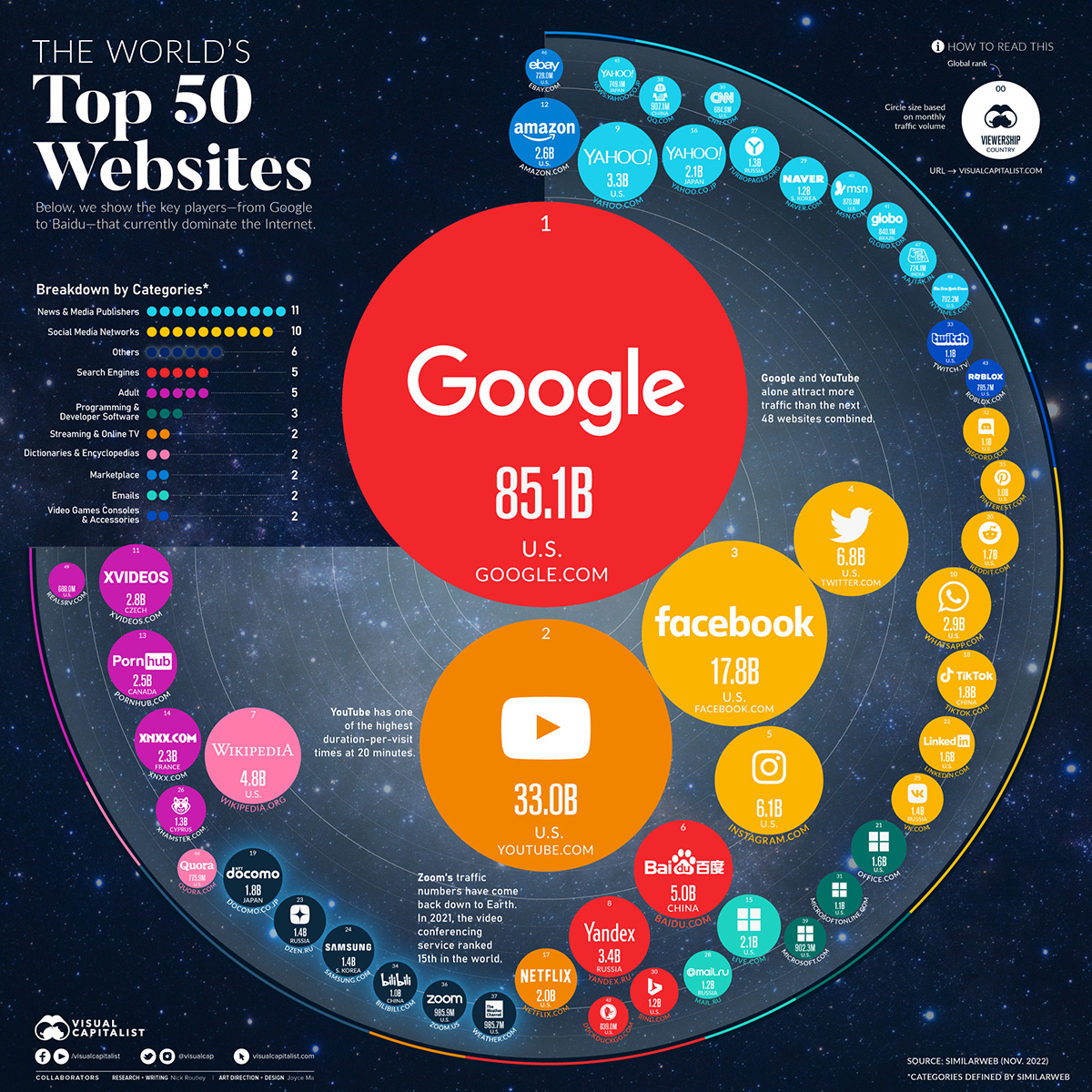
The infographic below is part of the post The Top 50 Most Visited Websites in the World which is a wonderful example of how an infographic can be used to share a great deal of information in a single image. This is a great infographic and even though some may argue that it has too much information you need to take into context just how much information is being summarized. Other than the legend and the labels there is very little text and in a few seconds you can determine which site is the most visited.


I have been involved in and around education as a graduate student, an instructor/professor, and as an administrator, and have seen or lived through many of these myths identified in the video below. Why do these myths persist or repeat? In the post How to Avoid EdTech Quickfix Traps I explore some of the reasons why technology can become a quick fix but I think the main problem is that we have moved so far away from The Learner’s Mindset and are simply looking toward simplistic and more easily measurable soloutions to the complex system of education.


