golden_circle

When a clear vision, what I will refer to as the “Why”, is missing people easily lose sight of their primary responsibility and get caught up in pushing priorities that may be important but when placed in context of the bigger picture result in a completely different focus. Let me explain…

My priority as an Instructional Development Consultant is to help faculty create the most effective learning environment. Therefore, I look for ways to use technology as a tool to enhance learning and create a more engaging environment. When I run into challenges, obstacles and the day to day bureaucracy of higher education I deal with those challenges or obstacles in such a way that they don’t hinder the faculty from creating significant learning environments and look for ways to ensure that we are still effectively serving our learner.

In contrast, if a person doesn’t have a clear understanding of Why we do what we do then they are left to focus on their own priorities and that usually means getting caught up in the details and minutia of their job. Institutions like BCIT have a FOIPOP policy and generally the purpose of these types of policies are to:

– Ensure compliance with the Freedom of Information and Protection and Privacy Act
– Define the roles of employees and contractors in complying with the Act
– Reduce the institutions liability and risk of litigation due to inappropriate handling of information
– Protect the institutions reputation

These are all admirably and necessary purposes and it is good that we have a policy and office which is concerned with these issues. Depending on your Why, something like a Freedom of Information and Protection of Privacy Act (FOIPOP) can be dealt with in two different ways.

First way
Without a bigger Why the people tasked with ensuring that these purposes are upheld make these purposes the top priority and all activities are weighed against these priorities. The best example of this in higher education is the debate of using the cloud, social media and other collaborative and distributed resources which the institution does not control. If a person’s Why is to enforce the policy then free software that is based in the cloud, social media tools and other resources cannot be used because these tools contravene the policy. If people are adamant about using these tools then explicit hoops must be jumped through or the institution will create its own cloud based tools that they can control. The first and most common response is to abstain or restrict for fear of the consequences. Fear becomes the driving force. Fear is the factor that is preventing all of higher education from moving to Google Docs or Office 365 and providing their students access to the most widely used collaborative tool, not to mention saving millions of dollars each year.

Second way
In contrast, if an institution and all members hold that their Why is much bigger than a policy and the top priority is to create the most effective learning environment for its students, when they come up against a policy like FOIPOP the response will not be reactive and based on fear. It will be proactive and creativity will be used to explore how can we use these engaging collaborative tools and still adhere responsibility to FOIPOP. With the right Why, people are automatically looking for ways to use these tools and still satisfy the FOIPOP requirements. More importantly the right Why can motivate people to explore creative solutions like revisiting the legislation to see if the interpretation that is being made is really the best interpretation that will help us to insure that we are creating significant learning environments.

IF everyone in an organization from the housekeeping staff on up to the President all hold the same Why—something like:

We are committed to creating significant learning environments that will help prepare our learners to face an uncertain future and enable them to learn how to learn and ultimately solve problems that don’t even exist.

then FOIPOP and other bureaucratic obstacles are not dealt with reactively in fear but are proactively managed in such a way that they do not hinder the bigger Why.

The change of perspective that a clearly defined and well communicated Why can move an organization from being fearful and reactive to being creative and proactive, assuming an organization has the leadership wisdom to value proactive workers (see my post The Paradox of Being Proactive.

Does your institutions have a clear and well communicated Why? If it doesn’t what can you do about it?


Tablets on Campus

Dwayne Harapnuik —  February 18, 2014 — Leave a comment

Tablets-Changing-College
Source: Accredited-Online-College.org

I generally will NOT write anything to support or explain an infographic because by their very nature they should convey all necessary information. If an infographic needs explaining then it isn’t a very good infographic. In this instance I think it is helpful to comment on the validity of the data and statistics that this infographic points to. I went to each of the sources cited in the infographic to confirm that the data was legitimate and to also to confirm that I am passing on a useful resource.

Much of the stats regarding student technology use come from the following three sources:

It must be noted that the Adobe report is not cited directly but Jimmy Daly the Online Content Manager for EdTech Focus on Higher Education cites content from this report in two of the blog posts cited in the infographic. To assure that information being presented is as accurate as possible I strive to rely primarily on original sources and look for infographics that do the same. I also compared this infographic to ECAR Student and Technology 2013 infographic summary from the 2013 ECAR Student and Technology Use Survey and confirmed that the statistics in this infographic are reasonably in line with the ECAR statistics.

It is clear from this infographic and the supporting reports the tablet has become the new tool of choice students are relying on to help them learn in the digital information age.

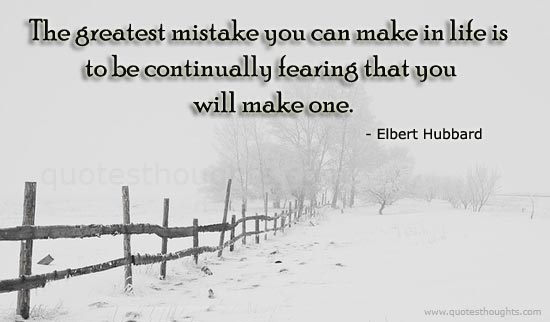
mistakes-Elbert-Hubbard

Source: QuotesThoughts.com

A few days ago I was reminded of the power of mistakes and how our responses to mistakes can be downright destructive to our learning environment and to our relationships. I also learned that reminding people of errors they have made in the past is detrimental to a relationship and the learning environment in the present.

Here is the backstory to these two insights…

My family took in an interesting talk and on the way home from the event I was casually quizzing my two boys to see if they were paying attention and to hear what they learned. My first error was to ask my boys questions that were superficial and informational. I seldom ask shallow questions and I generally am looking for something much deeper like an application, so my questions were not typical. My older son was very apprehensive in answering and after I directly challenged him, he informed me that he was hesitant to answer because he didn’t want me to make him “feel stupid” if he got the answer wrong. He knew the answer, but because I generally go much deeper he thought there was a string attached or it was a trick question. I saw the pain in his expression and I immediately knew that the issue wasn’t about the question; it was actually the festering response to a situation that happened a couple of days earlier. I immediately apologized to Levi and all I had to say was “the bearings” and he nodded his head in reference to the connection.

Levi and I were replacing the pivot bearings on his Commencal race bike and as he was pressing the main pivot bearing into the frame he wasn’t as careful as usual and the bearing was lodged in the frame incorrectly. Since the frame is aluminium and the bearing is hardened steel the potential for damage to the frame was significant, so my reaction reflected my alarm and I immediately got Levi to stop and we used the bearing puller to remove the bearing. There was a small groove in the pivot hole but the damage was not significant enough to adversely effect the performance of the frame. Levi knew he made a mistake and while I didn’t yell at or discipline Levi in any way, I did rant a bit about the need to be really careful and reminded him that an error like this could damage the $3500 frame. When I realized the frame damage wasn’t that significant I patted Levi on the back and said “we dodged a bullet” and we proceed to finish installing the main pivot bearing and the remaining bearings.

I assumed all was well because my boys have worked with me ever since they were small so I thought that Levi was used to my animated responses to problems or mistakes regardless of who was responsible. My reaction and comical statement, “shouldn’t have done that,” has been the same whether I or someone else makes the error, so I didn’t think that my reaction would have made Levi feel badly about the situation. Unfortunately, my reaction and reminder of his mistake made Levi “feel stupid” and because I missed this while we were working, this feeling of inadequacy was allowed to grow. Levi knew the value of the frame and he knew he made a mistake—I didn’t need to remind him to be careful. By reminded him of his error I treated him like a child, not a young man who is pursuing his dream and who values his bike. I spent the afternoon pondering how I was going to make this right with my son.

After Levi came back from his training session at the gym we had a talk and I again apologized for my reaction and for reminding him about the error. I also thanked him for being courageous enough to tell me that I had made him “feel stupid” and I gave him permission to remind me any time I started to stray into this territory with my actions and words. I reminded him of the talk we had when he and his brother were much younger and I gave them permission to say, “dad, you are taking the fun out this,” any time I got too carried away or too serious with their recreational activities. Levi smiled and said he would let tell me when I was blowing a situation out of proportion or reminding him of something he already knew. The strong hug and his hard slap on my back confirmed that we were OK.

Lessons learned:

  1. Informational or shallow questions can be an insult to our responsible children and learners. If you can look the answer up on Google then don’t insult your learners by asking it.
  2. Mistakes are a huge part of learning and reminding our children or learners of these errors when they already have learned from the mistake is not helpful. We can actually make our children or learners “feel stupid” or worse, make them hesitant to try. I am fortunate enough to have a relationship with my son where we could have a heart to heart talk and fix the situation with a strong hug, but you can’t always do that with your students—so it is best to try and prevent it. However, an apology to your class or specific learner will go a long way in resolving this issue. We need to make our learners feel safe enough to try, make mistakes and learn from them, not put them in a position where they are hesitant to even try to learn for fear of “feeling stupid”.
  3. Finally, letting your children or students know that even you make mistakes and are humble enough to apologize for the error of your ways lets them know that this just part of the the learning process.

Despite knowing how important errors are to learning I still struggle with being hard on myself and others around me when dealing with mistakes. Am I the only one with this problem?

beard facts

Source: DogHouseDiaries

I always suspected that stroking my beard/goatee increased my concentration and cognitive ability and now I have proof. Thanks to the Internet and some time you can justify just about anything 😉