[ted id=2420]

The data is in and confirms that:
UK academics and professional and support staff inhabit “two parallel universes that have little point of contact”.
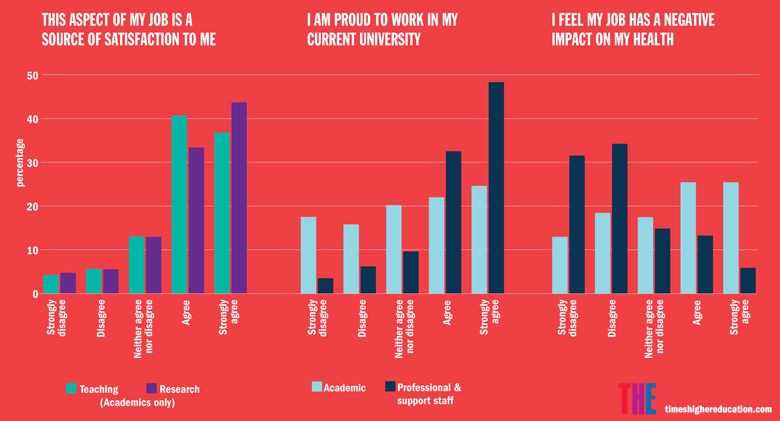
The Times Higher Education’s (THE) poll shows there is a deep gulf between academics and professional and support staff. Teaching and research are the primary source of job satisfaction for academics but most are not proud to represent their current university and more than half feel that their job has a negative impact on their health.
Source: THE University Workplace Survey 2016: results and analysis
In contrast, most professional (administrators) and support staff are not only proud of their current university they belief it benefits them and would recommend their institution as a great place to work.
Having worked as a faculty member and administrator in a variety of Universities across North America I am not surprised to learn that the survey reveals:
- Most university staff find their jobs rewarding, but most academics feel overworked, exploited and ignored by management
- A majority of staff feel satisfied with pay, conditions and professional development opportunities
- Half of academics are worried about redundancies related to metrics-based performance measures
- Half of academics think that their institutions have compromised undergraduate entry standards as competition for students has increased, and half feel under pressure to award higher marks.
I am also not surprised by the UK data and believe that it could be generalized and applied to institutions across the North America as well. I also see the two parallel universes in higher education here in North America because I have lived it.
Why is there such a split?
While the following attempt to explain and reconcile this split is not formally supported by any hard research I will however use the data from the survey, rely on almost three decades of experience in academia and will build on Simon Sinek’s argument in his TED Talk “First why and then trust” to apply his ideas to this challenge.
Sinek argues that one of the most difficult challenges any organization will face is when the organization grows and becomes succesful the organizational “Why” or purpose separates from the organizational “What”. This “split” Sinek explains happens when an organization moves away from its original purpose and starts focusing on What they do without being grounded in Why they do it.
The data from the survey confirms that most faculty go into academic work because they truly enjoy the teaching, learning and research, so anything that interferes with this focus detracts from their experiences. Most educators firmly believe it is our responsibility to teach our learners to learn how to learn in order to prepare them for a world that is constantly changing. A very clear learner and learning centered Why or purpose.
Unfortunately, not all administrators have this same goal or purpose and this lack of a consistent Why or purpose is one of the primary causes for faulty distrust and the split. Too many administrators are not educators who are passionate about why we do what we do in education and are not learner and learning focused. Instead of the primary goal of serving our learners, too many administrators are focused first on the “What” on things like competition, measurement, costs, logistics and all too often change itself.
Sinek points out that when stress goes up and passion goes down, when the organization focuses more on what the competition is doing and less on what they are doing, when they start asking outsiders: “Who should we be?” and “How should we talk to you?” then you know that you have a split in your organizational Why and What and have strayed from your core values. The survey confirms that all these symptoms are present in the UK system and I from my experience would argue in our North American systems as well.
What can we do about it?
There is no denying, like so many other parts of our world, the educational landscape is being radically disrupted so there are significant changes happening with the way we learn, teach, and do research. These changes are inevitable but we do have the choice to be proactive or reactive. I have argued in the posts Sense of Urgency, Create it Now or React to it Later, Paradox of Being Proactive, and Pick Two–Innovation, Change or Stability that we need to be proactive and use disruptive innovation as a catalyst to enhance our learning environments. We have to start with the learner and the learning.
The key is to ensure that academics and administrators hold to the same Why or purpose. Not the vague or obtuse vision statement that most academic institutions have adopted as part of their business plans but the simple fact that it is our responsibility to teach our learners to learn how to learn in order to prepare them for a world that is constantly changing.
I believe we don’t have a choice but to bring together the two parallel universes we, unfortunately, see in our educational organizations. Fortunately, the steps for this unification are straight forward:
- Start with Why
- Identify and engage key influencers
- Install an effective execution strategy
- Enlist and empower self-differentiated leaders
In the post “People who like this stuff…like this stuff” I offer an explanation on how to expand on this four step process for organizational change.
Neal Martin explains why it is do difficult to make changes if you attempt to do so based solely on your conscious or rational mind. He also explains that we need to have our subconscious and conscious minds working together if we want to be successful in changing behavior. It is crucial for us to understand that habits are not cyclical but are springs and once loaded can work for or against us.
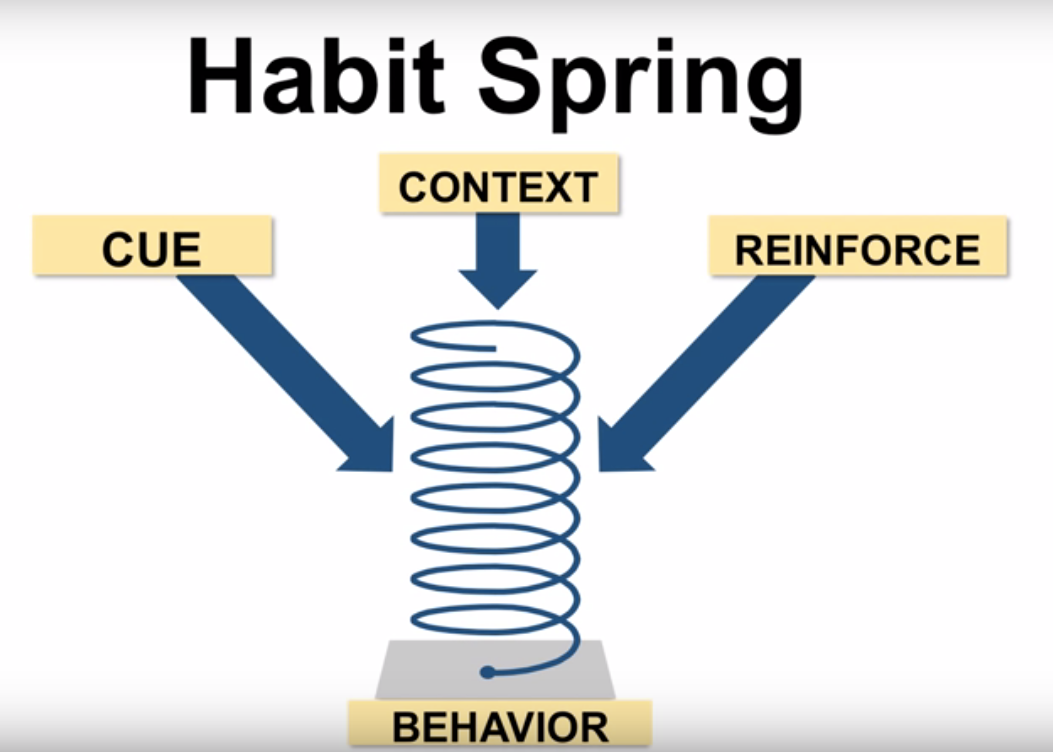
If we want to change behavior we must disrupt old habits while we create new ones. To disrupt old habits:
- Don’t load the spring
- Eliminate the cue
- Reframe the feedback
To create new habits:
- Translate goal into behavior
- Establish a clear context
- Develop a reliable cue
- Create a powerful reinforcement
- Repeat until it feels normal
If we consider how difficult it can be to change personal behaviors perhaps we can appreciate how difficult it can be to change behavior in organizations. These principles can be applied to organizations and through models like the Influencer and 4DX we can disrupt old organization habits with new ones. Not an easy task because “People who like this stuff…like this stuff” but it can be done.


