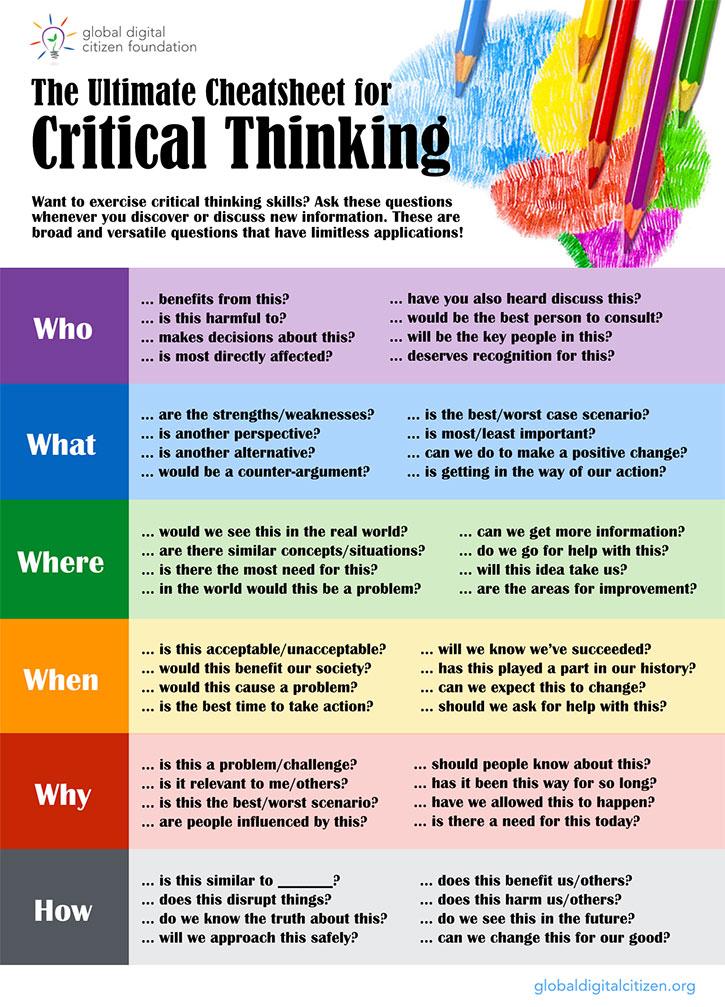
Source:https://globaldigitalcitizen.org/critical-thinking-skills-cheatsheet-infographic
Archives For Learning
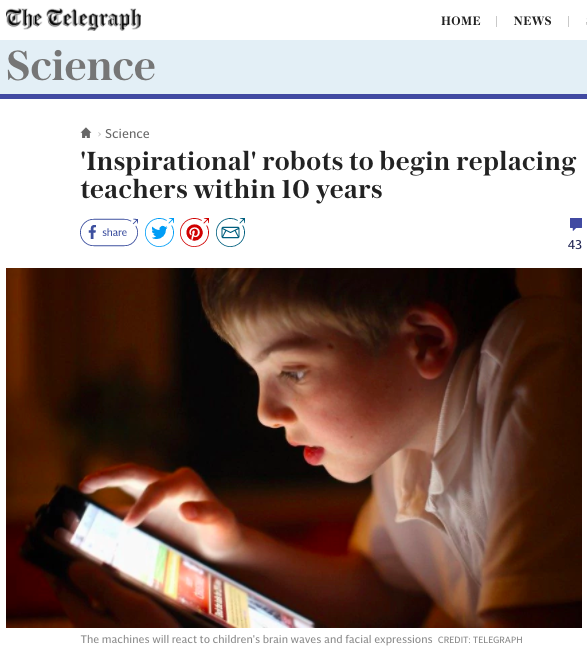
Over the past 25 years that I have been involved in education, I have seen so many claims that this or that technology will begin to replace teachers in “X” number of years. Years ago, my initial response to these types of articles was humor and occasional annoyance because I know from first-hand experience that there is much more to learning than just delivery of content. Unfortunately, authors of most of these types of articles are wrongly assuming that learning just involves the delivery of content and then the regurgitation of that content by the student. This commonly held and very naive understanding of how we learn goes back for centuries. If you look at the notion of the Nuremberg Funnel from the 17th century that is depicted in this image/stamp you will see that this idea of pouring information or content into the brains/heads of our students is a very old idea.

The 19th-century commercial artist Jean-Marc Côté created a series of picture cards as inserts that were intended to depict how life in France would look in a century’s time. The education card depicts the notion of pouring information directly into the student’s minds.
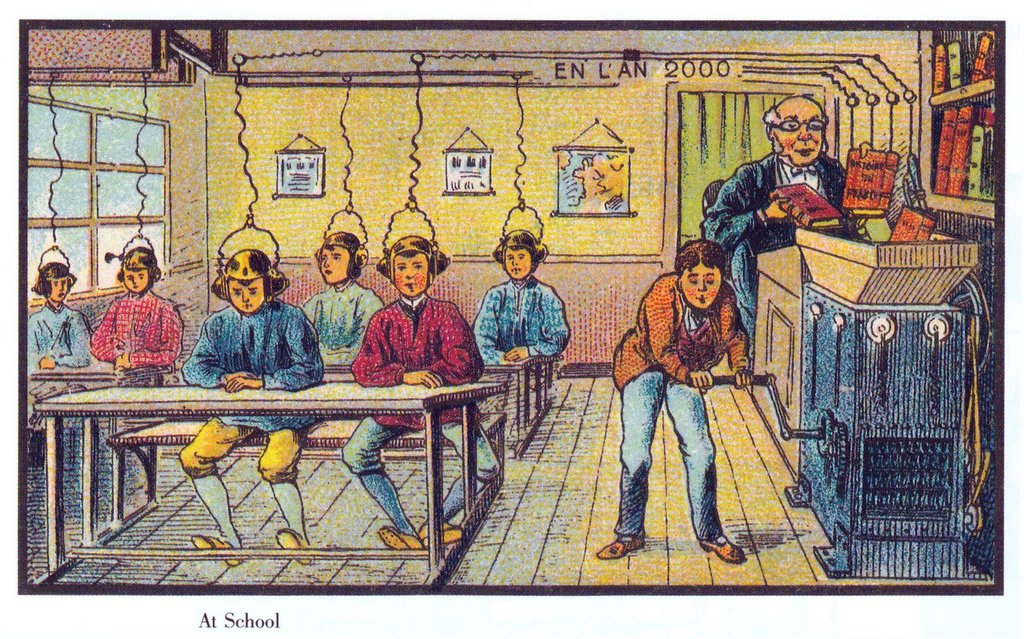
While some may see this as an early prediction of the audiobook the notion of pouring information into the learner’s minds is the focus of the image and is at the heart of the problem with these types of depictions/predictions. Before I focus on what I believe is the primary issue I need to acknowledge that there is a very long history of unrealistic claims of how technology would reform education. The following three contemporary authors have documented how schools have failed to effectively use technology to enhance learning. Larry Cuban’s Teachers and Machines: The Classroom Use of Technology Since 1920, addresses how the potential of film, radio, TV, and computers has been wasted in the classroom. Todd Oppenheimer’s The Flickering Mind: Saving Education from the False Promise of Technology expands on Cuban’s work and further reveals that the creative power of computers has been squandered due to their use as standardized testing tools. Both these authors acknowledge the potential and power of technology but show how we have failed to leverage that power for learning.
In the timeline History of Teaching Machines Audrey Watters points to the list of teaching machines that have been invented, patented, and promoted as time-saving solutions to the problems of education. We see major figures like Thorndyke, Skinner, and even Neo from the movie Matrix promising a future of instant learning. In her discussion of the dystopian future portrayed in the Matrix Watters questions how we value the process of learning when we so often want to supplant it with something that is, fast, cheap and instant. She argues that this desire for instant learning will continue to resurface time and time again and in the more recent stages of her timeline she points to Kahn Academy and MOOCs as the most recent iterations of the teaching machine.
This brings me back to the heart of the matter. Are we using technology as a tool to help make meaningful connections and to address the challenges of tomorrow or are we just using technology to deliver content and confirm that the student can regurgitate that content? There was a time not so long ago when getting access to information was the greatest challenge. We only have to look back a few years to a time when the Internet didn’t exist and we had to go to the library or other repositories of information to get at the content. I am not that old but I can recall a time in the 1960s when a set of encyclopedias was one of the most important purchases a rural family could make; I grew up searching those books for all kinds of answers. In the last 15-20 years the explosive growth of the Internet and more recently the ease with which we can find information with Google, YouTube, or other search tools and then can share that information on blogs, social media, and in so many other ways has changed the way we need to view our challenges regarding information. The greatest challenge of the industrial age was accessing information and now that we have moved into the digital information age our greatest challenge or problem is assessing information. This means we need to reassess our primary role or job as teachers.
If I imagine my primary job as a teacher is to serve information, am I helping solve the current informational problem or do I make it worse?
And given the vast complexity of the informational network, if I insist on my centrality and authority, does that establish or harm my credibility as a teacher?
If assessing information – and the wisdom & experience that this requires – is the central challenge of the current informational age, then are teachers more or less necessary?
Depending on how you answer this question should determine if your role as a teacher can easily be replaced by a computer or an inspirational robot. If you believe that your primary job is to deliver information to your students then these predictions will come true sooner than you expect. Technology is at the point where the delivery of information and the assessment of the reception of that information through some form of standardized test is already happening and can easily be automated. If you are a teacher that practices content delivery as the primary way to prepare your students for standardized tests then you can easily be replaced by a computer, robot, or other technology.
If you are a teacher who believes it is your responsibility to inspire your learners and to help them assess information and make meaningful connections by creating significant learning environments (CSLE) in which you give your learner choice ownership and voice through authentic (COVA) learning opportunities it will be impossible to replace you with technology. Furthermore, if you hold to the CSLE+COVA approach then you are not afraid of technology and can put technology in its proper place by using it to enhance the learning environment.
Before you breathe that sigh of relief that your teaching job is secure because you believe in the student-centered rhetoric of Dewey and other constructivists you may want to have a look at your practice. Are you talking the talk of Dewey but walking the walk of Thorndyke? Along with the long history of misapplying technology in education, we also have a long history of using the constructivist or progressive rhetoric of Dewey but practicing the behaviorist methods of Thorndyke’s standardized testing (Labaree, 2006).
If you really don’t want to be replaced by an inspirational robot then you need to not only talk the talk of Dewey but walk the walk. Does your practice match your rhetoric? If it doesn’t what are you doing about it?
References
Bodkin, H. (2017, September 11). “Inspirational” robots to begin replacing teachers within 10 years. The Telegraph. Retrieved from http://www.telegraph.co.uk/science/2017/09/11/inspirational-robots-begin-replacing-teachers-within-10-years/
Hill, D. J. (2012, October 15). 19th-century French artists predicted the world of The future in this series of postcards. Retrieved October 3, 2017, from https://singularityhub.com/2012/10/15/19th-century-french-artists-predicted-the-world-of-the-future-in-this-series-of-postcards/
Labaree, D. F. (2005). Progressivism, schools and schools of education: An American romance. Paedagogica Historica, 41(1–2), 275–288. https://doi.org/10.1080/0030923042000335583
Nuremberg Funnel. (2017, January 6). In Wikipedia. Retrieved from https://en.wikipedia.org/w/index.php?title=Nuremberg_Funnel&oldid=758530021
Watters, A. (2016, March 2) The allure of ‘Matrix-Style Learning.’ Retrieved from http://hackeducation.com/2016/03/02/matrix
Watters, A. (2016) History of teaching Machines. Retrieved from http://teachingmachin.es/timeline.html

Not many things we do in education decrease kids achievement and some of these actually make sense. The presence of one disruptive kid in a class negates the performance of most kids, so when you take those kinds of negative ones you’d expect to be negative out, about 95 to 97% of things that we do to kids to enhance their achievement work. — Hattie
When you combine Hattie’s research on student achievement with the foundational ideas on learning from educational thought leaders like Dewey, Bruner, Piaget and Papert one can argue the human being is the most amazing learning entity in the face of the planet. I like to summarize these ideas by suggesting that just as long we aren’t physically or psychologically harming our learners almost anything we do as an instructional practice will help our students achieve.
But as Hattie warns just because we can show some type of improvement in achievement that doesn’t mean that anything goes and that we should continue to do what we have always done in the classroom. On the contrary, Hattie points to his research that shows we need to focus on those things that will move student achieve beyond the average effect size of .4. We need to do those things that will help our students learn the most.
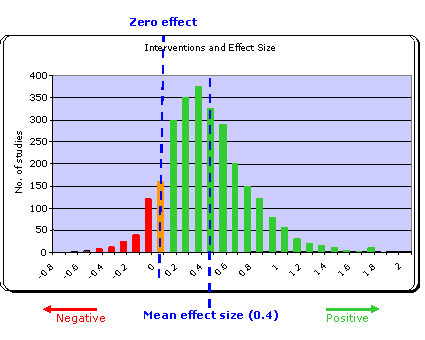
We need to focus on the things like formative feedback, visible and mastery learning and much more that will do the most to improve student achievement and not focus on the politically expedient things like class sizes, rigor, and homework and so many other things which have a smaller than average impact on achievement. The following videos and images below provide an effective summary of what we should be focusing on to improve student achievement.
Hattie spends a considerable time talking about Outward Bound activities because they make learning visible, provide an authentic context for learning, and also give the learner immediate feedback on the learning process. Authentic learning opportunities feed Hattie’s notion of visible learning because they provide a wonderful opportunity for teachers to evaluate their own teaching and enable the teachers to see learning through the eyes of their students and help their students become their own teachers and learn how to learn (Hattie, 2009, 2011). Hattie also argues that teacher must develop the following mind frames that underpin their every action and decision:
- My fundamental task is to evaluate the effect of my teaching on students’ learning and achievement.
- The success and failure of my students’ learning is about what I do or don’t do. I am a change agent.
- I want to talk more about learning than teaching.
- Assessment is about my impact.
- I teach through dialogue not monologue.
- I enjoy the challenge and never retreat to “doing my best”.
- It’s my role to develop positive relationships in class and staffrooms.
- I inform all about the language of learning.
John Hattie: Visible Learning Pt 1. Disasters and Below Average Methods.
John Hattie, Visible Learning. Pt 2. Effective Methods

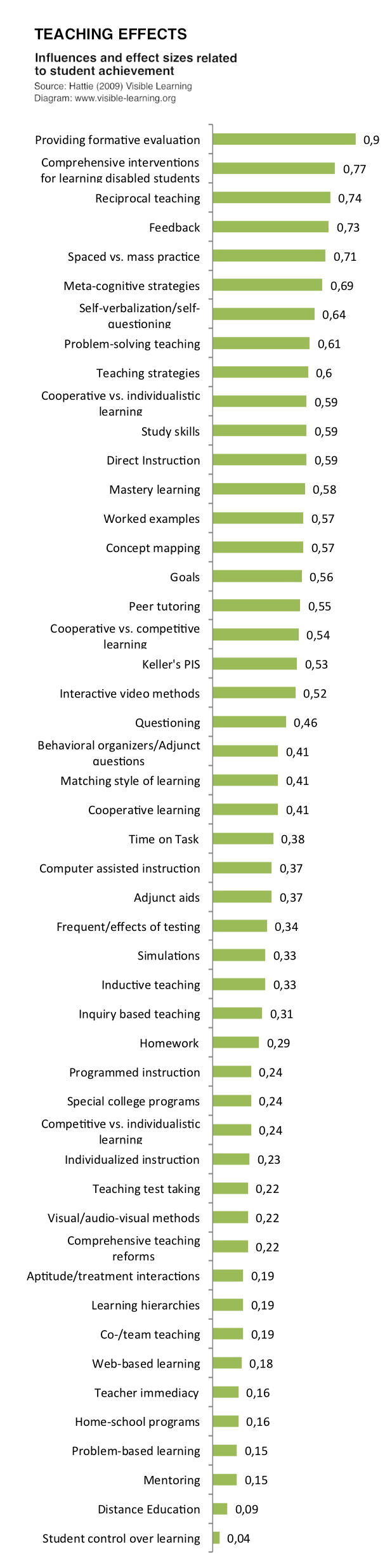
Source: Hattie Ranking: Teaching Effects
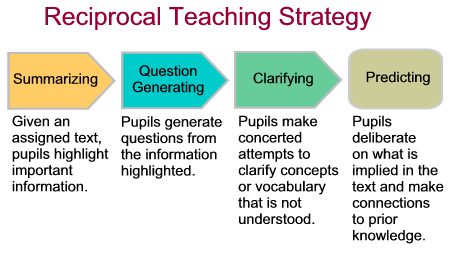
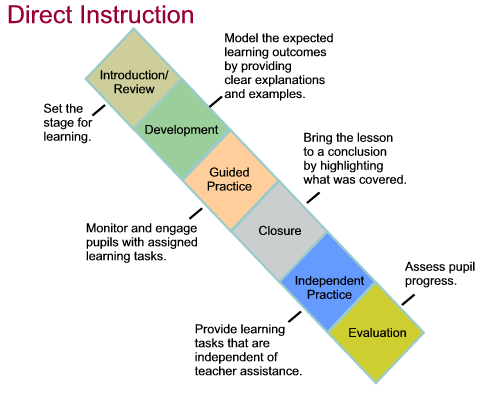
Additional student achievement ideas to consider:
Full Hattie Ranking – https://visible-learning.org/hattie-ranking-influences-effect-sizes-learning-achievement/
Hattie’s Visible Learning site – https://visible-learning.org/
The key to improving student achievement – https://www.harapnuik.org/?p=6434
References
Bell, M. (2011, November 28) John Hattie: Visible learning Pt 1 disasters and Below average methods. [Video File]. Retrieved from http://youtu.be/sng4p3Vsu7Y
Bell, M. (2011, December 1) John Hattie: Visible learning Pt 2 effective methods. [Video File]. Retrieved from https://youtu.be/3pD1DFTNQf4
Bruner, J. S. (1960). The process of education. Cambridge, MA: Harvard University Press.
Dewey, J. (1916). Democracy and education: An introduction to philosophy of education. New York, NY: Macmillan.
Hattie, J. (2008). Visible learning: A synthesis of over 800 meta-analyses relating to achievement. Routledge.
Papert, S. (1993). The children’s machine: Rethinking school in the age of the computer. New York, NY: Basic books.
Piaget, J. (1964). Development and learning. In R.E. Ripple & V.N. Rockcastle (Eds.), Piaget Rediscovered: A Report on the Conference of Cognitive Studies and Curriculum Development (pp. 7–20). Ithaca, NY: Cornell University.
In the Curiosity is the Cat post, Will Richardson makes the argument that curiosity is the only “C” that truly matters. Richardson alludes to the variety of authors who have pointed to 4, 7, or more Cs of 21st Century learning and suggests that without curiosity you wouldn’t have critical thinking, creativity, communication, and collaboration. He also points to the reality that our children are filled with curiosity prior to going to school and by the time they are in their teens they have little curiosity for anything to do with the curriculum. There appears to be a correlation between the ages that children lose their curiosity and a number of questions that they ask.
Santana & Rothstein of the Right Question Institute have compiled a graphic from NCES data that shows children’s peak questioning happens at age 4 and then significantly declines as they progress through school.
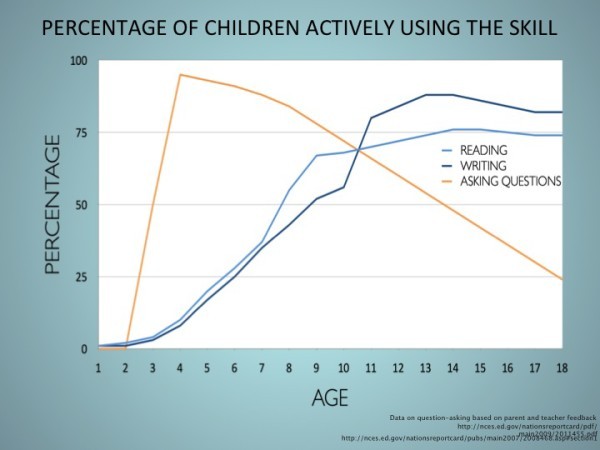
Warren Berger confirms this correlation in his book A More Beautiful Question and points to our education systems that reward rote answers over challenging inquiry as one of the primary causes of this decline. Our educational system focuses on giving the right answers as opposed to starting with the right questions. And yet the most innovative organizations in the world like Google, Netflix and IDEO and most innovative artists, teachers, and entrepreneurs look to change the world by starting with a “beautiful question.” Innovation requires starting with questions and our current educational system is not preparing learners who are equipped to ask questions and innovate.
When we focus on the right answers instead of starting with questions we not only extinguish our learner’s ability to question, inquire and innovate we create an environment of rewards and punishment that fosters fear in the learner when they aren’t able to regurgitate the right answer. In my research into how to get adults more comfortable with using technology, I learned that in order to stimulate the natural curiosity that is extinguished by our educational system I had to first help the adult learner get over their fear of doing something wrong or the fear of not knowing the right answer. Once steps were taken to help adult learners deal with this fear then we could start working on rebuilding that inquisitiveness that would help them to explore and see “what would this button do” as they learned how to use technology. While my approach to adult learning called Inquisuitivism proved to be effective, I couldn’t help wonder why we had to reactively help people rebuild a natural disposition or mindset that we all have as children.
Instead of attempting to reignite our learner’s inquisitiveness wouldn’t it be much more effective to nurture that natural ability they have in abundance before they start school? When we ask this question we need to be prepared to do something about what our inquiry reveals. There is no doubt that if we continue to do what we have always done in school our passive educational environment of main lecture points, content delivery, step by step rubrics, individual competition and standardized testing will continue to efficiently extinguish our children’s natural inquisitiveness.
It doesn’t have to be this way. Like Santana & Rothstein, Richardson, Burger, I also believe that we can help develop connected curious learners who will become the innovators of the future. While reigniting the questioning spark is extremely important this is only one part of a bigger process. If we focus on just this part of the problem we can easily fall into a quick fix mentality which is another perennial problem that we face in education. There are no quick fixes; we have to purposefully design our learning environments. We have to stop doing what we have always done and start creating significant learning environments by giving our learners choice, ownership, and voice through authentic learning opportunities (CSLE+COVA).
References
Berger, W. (2014). A more beautiful question: The power of inquiry to spark breakthrough ideas. New York, NY: Bloomsbury USA.
Richardson, W. (2017, February 11). Curiosity is the cat. Retrieved from https://willrichardson.com/curiosity-is-the-cat/
Santana, L., & Rothstein, D. (n.d.). Percentage of children asking questions. Retrieved from http://rightquestion.org/percentage-children-asking-questions/


