Archives For Learning
If you have been around school of any level for the past 20 – 30 years or more you may have noticed that there are all kinds of learning. The following list is just a very short snapshot of the past 25 years and is by no means complete or is it chronological:
Flexible Learning
Digital Learning
Blended Learning
21st Century Learning
Mobile Learning
E-Learning
Virtual Learning
Online Learning
Distance Learning
Active Learning
Student-centred Learning
Problem-based Learning
Project-based Learning
Natural Learning
Mastery Learning
Social Learning
Discovery/Inquiry Learning
Experiential Learning
Case-based Learning
Scenario-based Learning
Situated Learning
Authentic Learning
Even when learning theorists place the different types of learning into one of the follow four major paradigms:
- Behaviorism,
- Cognitivism,
- Humanism,
- Constructivism;
we are still left with a fundamental problem.
We focus on the type of learning and not the learning itself. There is an assumption with most educators that we have the learning part figured out and if we, for example, get the mobile, or digital, or flexible and so on… part right then everything will work just right. Unfortunately, it doesn’t work that way.
It’s about the learning first–the type, approach or “ism” comes second.
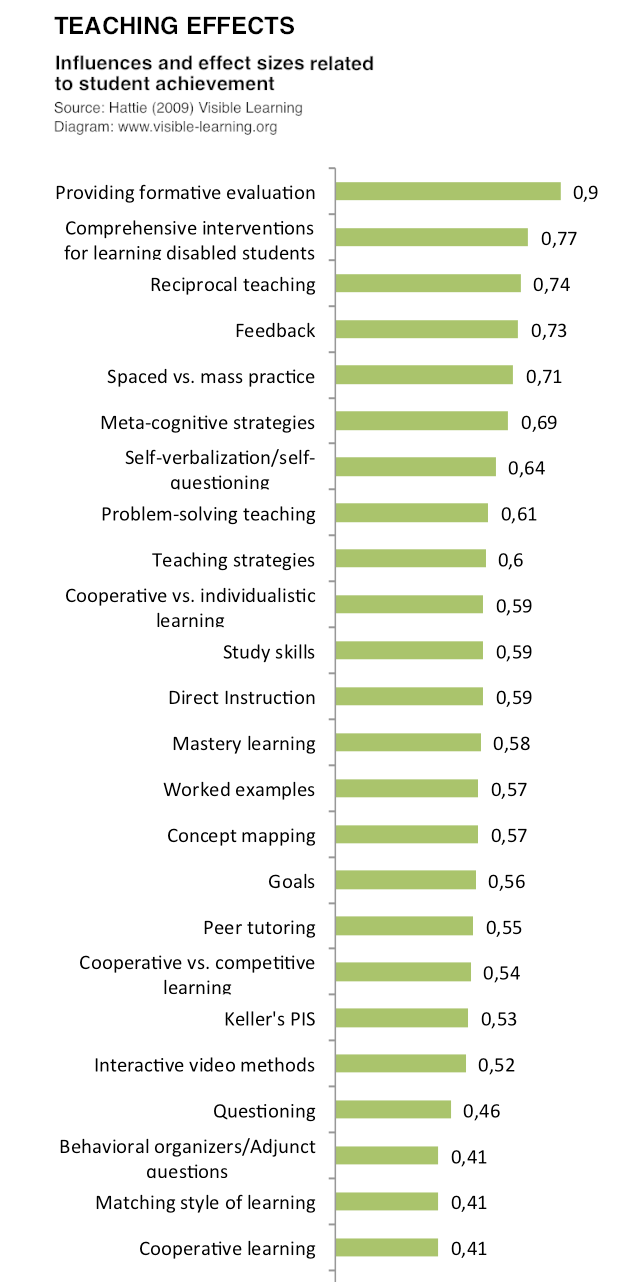
Fortunately, the human being is one of the most amazing learning entities on this planet and as John Hattie points out in his book, Visible Learning, and various presentations, short of physical and psychological abuse, almost anything you do in the classroom will positively impact student achievement…the key is to figure out what promotes achievement.
Yes. It’s about the learning.
This past week in a curriculum development course I was facilitating I was reminded of a huge responsibility I have as a professor; and that we all have as members of humanity.
As is normally the case when I show my class a Youtube video on Carol Dwecks Mindset the ensuing discussion was lively, passionate and sobering. In Mindset: The New Psychology of Success, Dweck makes the well researched argument that intelligence and talent are not fixed a birth and that by adopting a growth mindset, learners become more willing to take on challenges, try harder, embrace setbacks, learn from feedback/criticism, find inspiration in other’s success and ultimately reach higher levels of achievement. These are all the characteristics that we want in all learners especially as we move into the digital information age.
Unfortunately this too often is not the mindset that we see in most of our learners. One seasoned and insightful instructor taking my course pointed out that too many of his learners believe they are entitled to an “A”, believe that challenges are only for those who lack ability, are not willing to learn from feedback and are threatened by the success of others. He rightfully pointed that many of these types of learners would be quite upset with having to deal with this idea of the growth mindset because they been feed a consistent diet of fixed mindset thinking. This type of thinking could shake their world.
He was right…this type of thinking has the potential to change the learner. Change often puts people on the defensive or even makes them angry. Even if we just reach one learner at a time in our classrooms, the ripple effect from this change will eventually change that learner’s world. It is possible to change the world one learner at a time.
So is this yet another responsibility placed upon college and university professors, teachers and instructors? When you consider that anywhere from 70 – 90% of learning is informal and happens outside of the classroom (see Jay Cross post Where did the the 80% come from) the responsibility to impact the learners around us is societal. We are all learners. Whether they are our children, family, friends, co-workers our staff or colleagues we all have learners in our sphere of influence.
Are you changing the world one learner at a time?
The following are the links to articles, blog post, YouTube videos, TED Talks and books that were used or referenced in the PIDP 3210 Curriculum Development course that ran in College of New Caledonia in Prince George British Columbia (January-February 2015).
Not Suited For School But Suited for Learning
You will find this video, learning philosophy and links to many of my presentations, and my favorite blog posts on my blog About page.
The Head Won’t Go Where the Heart Hasn’t Been
Benjamin Bloom argued that we need to address all the domains and find a balance. We often over emphasize the cognitive domain, relegate the psychomotor to the trades or other overtly physical disciplines and limit the affective domain to ethical or values issues. This limitation will severely limit the change that is necessary for learning. The blog post The Head Won’t Go Where the Heart Hasn’t Been post includes a more detailed explanation of the importance of the affective domain and has links to the Behavioral Science (BS) Guys video How to Change People Who Don’t Want to Change and also a related TED Talk Why TED Talks don’t change people’s behaviors.
Fixed VS Growth Mindset
The Power of belief — mindset and success | Eduardo Briceno | TEDxManhattanBeach
You will find a very useful Fixed vs Growth Mindset graphic and a short comparison of how the Fixed Vs Growth Mindset is equivalent to the Print Vs Digital Information Age on the blog post Fixed Vs Growth Mindset = Print Vs Digital Information Age
Carol Dweck’s book Mindset: The New Psychology of Success is definitely worth the read.
Mistakes are for learning
It’s a Mistake Not to Use Mistakes as Part of the Learning Process blog post refers to Brian Goldman’s TED Talk:
Doctors make mistakes. Can we talk about that?
Intrinsic VS Extrinsic Motivation
RSA Animate – Drive: The surprising truth about what motivates us
Daniel Pink’s book Drive: The Surprising Truth About What Motivates Us
is worth the read.
Don’t Let Learning Styles Limit Your Learning
Learning Styles Don’t Exist
Content Saturation
In the article Rescuing Nursing Education from Content Saturation: The Case for a Concept-Based Curriculum Jean F. Giddens and Debra P. Brady argue that nursing education has been plagued with a saturation of content for many years. Fortunately, they offer recommendations on how to move away from content delivery and saturation and how to create a learning environment based on a conceptual approach to curriculum development. Even though this article is focused on nursing it is a good read for any instructor in any discipline.
People Don’t Buy What You Do They Buy Why You Do It
Start with why – how great leaders inspire action | Simon Sinek | TEDxPugetSound
Simon Sinek’s book Start with Why: How Great Leaders Inspire Everyone to Take Action
is worth the read.
Parenting and Child Development
There were several discussions over the final weekend regarding parenting and Gary Neufeild’s book Hold On to Your Kids: Why Parents Need to Matter More Than Peers was referenced and is worth the read.
The BEST TED talks to take in:
Sir Ken Robinson: Do schools kill creativity?
Sir Ken Robinson: Bring on the learning revolution!
The blog post Want to Change the World – Tell a Good Story offers links to the top TED Talks of all time.

Source: deathtothestockphoto.com
Progression of Blended, Online & Mobile Learning
I built my first blended learning course in 1994 and started teaching fully online in 1995 and in the past twenty years I have seen steady progress in the use and acceptance of online learning. Unfortunately, I have always been overly optimistic and have believed that well designed online learning could radically improve our educational systems. When the smartphone started to hit saturation levels in north america and mobile learning hit the peak of its hype cycle in 2010/11 I was further encouraged that the notion of “all the time and anywhere” learning had finally become widely accepted. The forward momentum of mobile learning was abruptly interrupted by the latest disruptor to higher education–MOOCS
MOOC Hype
The MOOC hype started in earnest in 2011 and was in full force with formation of Udacity, Coursera, edX and several other content/course delivery organizations in 2012. Many higher education administrators and proponents of the MOOC hype claimed that the disruptive aspect of MOOCs would not only change education but that it would bring an end to traditional education. Many of these claims are similar to the claims made in the mid 1990’s and early 2000’s when the online learning pioneers started to take advantage of the potential of the internet. The reality of immature learning management systems, poor or missing instructional design, abysmal completion rates (often in the single digits) and the high costs of MOOCs have significantly quenched the MOOC hype.
Reality Check – Its Still About The Learning
The latest figures that come from the Babson Survey Research Group’s annual survey, which was based on a 2014 survey of more than 2,800 academic leaders, reveals:
MOOCs are no longer considered a useful tool to learn about online pedagogy

Education costs, learning outcomes, and competency based education are much more important than MOOCs

The Babson survey also reveals that academic leaders believe that some aspects of online learning are positive:
- Online education has become mission-critical, even at small colleges.
- “Hybrid” courses are at least as good as face-to-face courses.
The survey reveals that most professors still don’t think online courses are legit so whether the adverse effects of the MOOC hype are a contributing factor or that faculty just have not learned how or received the professional development to build effective online learning environments, even in 2015 we still have a long way to go before online learning is fully accepted.