Archives For DLL

In the Influencer: New Science of Leading change, Joseph Grenny (2013) and his colleagues point to the example of how the eradication of the Guinea worm was accomplished through three vital behaviors and the supporting six sources of influence. The Guinea worm is a parasite that infected 3 million people in 23,000 remote villages in 20 countries. The Guinea worm was spread through the water supply for all these villagers. Once the Guinea larva was ingested a Guinea worm would hatch out of the larva and start to work its way out of the host’s body in whatever way it chose. This caused immense pain that was temporarily lessened when the infected person immersed themselves in water. The worm would then inject thousands of eggs into the water perpetuating a cycle that had lasted for thousands of years.

The goal of Dr. Hopkins from the Carter center was to stop the spread of the Guinea worm and ultimately eradicate the this blight on humanity. For the sake of using this example in EDLD 5304 this goal would be referred to as the result.

Three vital behaviors were identified that would prove to lead to the near eradication of the disease:

  1. People were required to filter their water.
  2. An infected person must not make contact with the public water supply.
  3. If a villager is not filtering water or becomes infected the villagers must confront them.

The Introductory section of Part 2 of the the book (pages 67-75 in the paperback version) offers a wonderful summary of the whole Guinea worm scenario and also provides a detailed explanation on how the six sources of influence came into play in helping to change behavior that ultimately lead the eradication of the Guinea worm.

This is a very helpful example to use in assessing your Guinea worm (your situation) and identifying:

  • Results you want to achieve and how you will measure them.
  • Vital behavior(s) you are trying to change.
  • Who are you organizational influencers.

Using this section of the book and the six sources of influence matrix from the 10x Your Influence Research Report should put you on the right path to building your own influencer strategy. So what’s your Guinea worm and what are you going to do about it?

View the status of the eradication of the Guinea Worm – https://www.cartercenter.org/health/guinea_worm/case-totals.html

Reference

Grenny, J., Patterson, K., Maxfield, D., McMillan, R., & Switzler, A. (2013). Influencer: The new science of leading change (2nd ed.). New York, NY: McGraw Hill Professional.

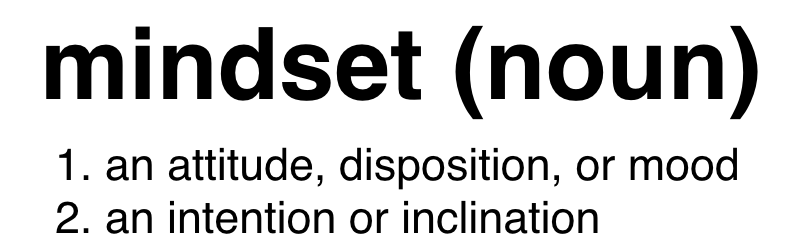
Mindset Definition
When my boys were quite young I started to encourage them to continually and perpetually look for a better way to do anything and everything. I used to joke around with them saying: “your dad is the laziest guy they will ever meet because I am always looking for a better or easier way to do things so that I can finish up the stuff I don’t like doing and get onto the stuff like do like doing like riding our bikes, or playing games or just hanging out”. I also gave my boys permission to stop me when we were working on anything to offer a suggestion on how they thought we could do the task in a better or easier way.

Over the years there have been countless times that my boys have offered suggestions or walked me through their ideas on doing some task that ended up in a me saying, “Yes, your right this is a better way, thanks let’s do it your way”. Many years of working with my boys have also helped me to realize that the better way isn’t aways the easier or faster way. We also learned that there are times the easier way may initially seem faster, but if you weren’t able to do things well enough and had to do something over again the better way could actually be the easier and faster way.

My boys aren’t really boys anymore; they are young men. The other day we were exploring how to design a braking and cornering drill that they could use in their Down Hill mountain bike training. They both want to move up the professional ranks in their sport and realize that they need to go faster which means that they have to learn to brake less or at the optimum moment and to corner better, so setting up drills that they can practice on a daily basis is really important. They use a variety of tools like GoPro cameras and Freelap timing equipment for feedback on their training so they are always discussing the best way to use the technology to enhance the learning or training environment.

My younger son Caleb is a stickler for doing things better so he was suggesting that he and his brother need to use two Freelap timing stations. One timing station at the beginning of the turn where you would start braking and one a few metres past the exit of the turn so that you can use a timing split to accurately gauge the improvement of braking at different times and places. Using a split would also control the differences in how fast one peddled up to the brake point and would give you are more accurate representation of the difference in breaking would make on your exit speed on the turn. You have to understand that the professional level of their sport the difference between 1st, 2nd or 3rd place in a race can be the difference of a few hundreds of second so gaining a half seconds on a few turns on a race course can make the difference between being on the podium or finishing out of the top 10.

His older brother Levi suggested that using one timing station would be good enough to give you an idea of where to brake and how much of a difference it would make so we all had a good discussion exploring if the level of accuracy the two timing stations and the timing split would be necessary. We came to the conclusion that it probably would be better to have the accuracy the two timing stations and the split would offer but we were not sure it would it be necessary. Since we have access to the equipment my boys are going to test it out.

If you don’t know, give it a go — is the approach my boys have always followed even before Ken Robinson referred to this idea in his Schools Kill Creativity TED Talk. I have always been careful to nurture and help them maintain that natural or intrinsic inquisitiveness all young children have and that they seem to lose within a few years entering into our formal education system. I have also looked for ways to help all learners, I am responsible for, regain or stimulate that natural inquisitiveness that is so important for learning.

It is exciting to think that the desire for, or the pursuit of, the better way may of had it roots in those early years when I encouraged my boys to maintain their natural inquisitiveness and to always look for a better way to do anything and everything. This attitude, or perhaps mindset, will enable them to improve their training and help them with their racing careers. I also think it will help them in many other aspects of life. By constantly looking for the better way they will constantly be asking question and looking for options that will help them solve life’s challenges. Hopefully they will never be satisfied with doing things the way they have always been done but will continually look for a better way.

The pursuit of the better way is what I like to refer to as the learner’s mindset and is something that I believe is central to our human nature. It is more foundational than Carol Dweck’s growth mindset in which people believe that their most basic abilities can be developed through dedication and hard work—brains and talent are just the starting point. Dweck argues that the growth mindset will stimulate a love of learning and foster a resilience necessary for great accomplishment and can simply be adopted by adding the notion of “not yet” to a negative belief about one’s ability or talent. The learner’s mindset is even more foundational to George Couros’ innovator’s mindset considering his assertion that the innovator’s mindset takes the growth mindset a step further by focusing on using one’s ability to learn and to create or the belief that our abilities, intelligence, and talents are developed so that they lead to the creation of new and better ideas.

The growth mindset is crucial to opening one up to learning and the innovators mindset is crucial to motivating one to create new and better ideas, but both require that natural or intrinsic inquisitiveness that we see in infants, toddlers and young children who haven’t yet had this spark of curiosity and creativity quenched by our educational systems. I am not alone in this assertion – that schools kill the natural desire to learn or as Ken Robinson states Schools Kill Creativity. We also see a similar fundamental belief that children are pre-adapted to learning and have a natural curiosity from learning theorists like Jerome Bruner. Carol Dweck’s lament of her elementary school teacher labeling her and starting her down the spiral of the fixed mindset is not an isolated story and it doesn’t take much for each of us to think back to a time when we were labeled or categorized and put into a position of believing that we just didn’t have what it takes.

Perhaps if we focused on nurturing and supporting this natural inquisitiveness and predisposition toward learning we would be much further ahead and wouldn’t then have to attempt to restore or rebuild what we have torn down in the first place. Fortunately, the human being is the most amazing and resilient learning entity on our planet so even if our schools do kill creativity and standards based assessment systems quench the natural natural or intrinsic inquisitiveness of the learners mindset it only takes a little bit of choice, ownership, and voice given through an authentic learning opportunities to kindle that spark of the learners mindset.

This is why Dweck’s notion of “yet” is so powerful. Not yet sparks our intrinsic inquisitiveness, flames the fires of our intrinsic desire to learn and stokes our learners mindset.

References

Bruner, J. S. (1960). The process of education. Cambridge, Massachusetts: Harvard University Press.
Bruner, J. S. (1966). Toward a theory of instruction. New York: W. W. Norton & Company, Inc.
Couros, G. (2015). The Innovator’s Mindset: Empower Learning, Unleash Talent, and Lead a Culture of Creativity. San Diego, CA: Dave Burgess Consulting Inc.
Dweck, C. (2006). Mindset: The New Psychology of Success. Random House Publishing Group.
Robinson, K. (2016). Ken Robinson: Do Schools Kill Creativity? Retrieved from https://www.ted.com/talks/ken_robinson_says_schools_kill_creativity?utm_source=tedcomshare&utm_medium=referral&utm_campaign=tedspread

Spaces for answers
Source: deathtostockphoto.com

The other day in our online class meeting in EDLD 5313 – Creating Significant Learning Environments course, one of the core courses in the M. Ed. in Digital Learning and Leading at Lamar University, one of my students asked me why this particular course that deals with learning theory and creating significant learning environments was not one of the first courses in the program. I explained that we run the learning theory course after EDLD 5305 – Disruptive Innovation in Education, the course in which the students research and develop a learning innovation proposal and plan, because 5305 creates a context for which you need to explore your beliefs about learning. Without having a context to look at how people learn, the work on learning theories is just theoretical. The genuine context provides the real world need or application where one needs to explore how best to design and create learning environments.

I am more than likely articulating this better in this post then I did in the meeting and as I thought about what I wish I would have said, Clayton Christensen’s perspective on learning came to mind. In a conversation with Jason Fried published in Inc in 2012, Christensen and Fried talked about innovation, the trap of marginal thinking, and learning. The perspective on learning that really caught my attention was the notion that someone can’t be taught until they are ready to learn. Christensen frames his perspective in the following unique way:

Questions are places in your mind where answers fit. If you haven’t asked the question, the answer has nowhere to go. It hits your mind and bounces right off. You have to ask the question — you have to want to know — in order to open up the space for the answer to fit.

When viewed in this light the reason we run EDLD 5305 – Disruptive Innovation in Education first and get students to start the process of creating a learning innovation proposal and plan, is that 5305 disrupts students enough or disrupts their typical thinking about teaching and leanring enough, where they start asking the types of questions that will be addressed in EDLD 5313 and many other courses. Many students lament in the class discussions, class meetings, and in their reflections that this course and program has forced them to re-think many of their ideas about teaching and learning. Students often feel unsettled or uncomfortable because they may feel they have more questions then they have answers.

We have designed the DLL program and the courses to push students to start questioning conventional thinking about teaching and learning, the educational system, their schools and classes, and their process and methods so that their minds are opened up enough to the point that they want to know how to do things different. The program and courses are design to open up spaces in our learners minds for new ideas to fit and when we explore those new ideas in the next module or course many of those disconcerting questions or spaces are filled with the new ideas—only to have new questions that start to open up new spaces in their thinking.

In an age of standardized testing, of covering the content, of checklists masquerading as rubrics, and the need to regurgitate the right answer, getting learners to struggle with challenging questions is unfortunately a foreign concept. But learning has never fundamentally been about spouting off the right answer; it has always been about making meaningful connections and to make those meaningful connections you have to start with the questions. The type of questions that open up the spaces in our thinking and motivate us to want to know and to make those meaningful connections—only to have the whole process start over. This is learning—this is life.

References

Fried, J. (2012, September 25). A Conversation with Innovation Guru Clayton Christensen. Retrieved September 7, 2016, from http://www.inc.com/magazine/201210/jason-fried/a-conversation-with-innovation-guru-clayton-christensen.html

My boys are competitive Down Hill Mountain bike racers and they recently raced in several events at Whistler Crankworx. This meant that they had several practices, qualifiers, and final races that ran very close together and had to incorporate protein and energy bars into their nutritional plans to get them through their hectic schedule over the week of racing. High quality protein and complex carbohydrates packed into a portable bar are not just a convenience for my sons, they are a necessity if they wish to stay fully fuelled and competitive. Slipping a couple of these small energy packed bars into a jersey or shorts pocket means my boys can quickly and easily maintain their nutritional needs for the hectic training and/or racing session.

A quality protein and energy bar has little or no sugar, uses natural ingredients, and has a balance of protein and complex carbohydrate to help an athlete maintain their energy when they are unable to access whole foods. Bars that are nutritionally high quality often don’t taste the greatest because the manufacturers stay true to the purpose of helping to fuel a competitive athlete. Unfortunately, as protein and energy bars get more and more popular quality bars are getting harder and harder to find because too many manufacturers are willing to move away from the fundamental purpose of the bars and focus primarily on the taste of the bars at the expense of the nutritional quality.

When you focus on the taste and not the nutritional needs of an athlete you end up with something that sounds like it would be a good thing, but when you look at the details you find it’s not the case. The list of ingredients on the following popular protein and energy bar reveals that taste and not nutrition is their priority:
Power Bar Ingredients

Evaporated cane juice syrup and corn maltodextrin are the first and third listed ingredients which also indicates their quantities. While neither of these ingredients are listed as sugar they are essentially the same as sugar hiding behind a more natural name. The more diligent athlete who is aware of the sugar synonyms won’t be tricked by the manufacturer and will look for a better bar, but for the average person who isn’t as informed this fake protein and energy bar is really not much better then a typical candy bar. At least in the candy bar the manufacturers don’t try to hide the actual ingredients behind more natural sounding names:

chocolate bar ingrediants

What makes this really serious is that the majority of protein and energy bars are really not much better or different then candy bars when you look at the first three ingredients:

Protein bar – Evaporated cane juice syrup oat bran, corn maltodextrin and soy protein isolate
Candy bar – Sugar, peanuts, and corn syrup

Yes the protein bar does have a few better ingredients, it does have soy isolate protein powder, but for the most part it is just a candy bar with added protein. This is very alarming and in the display pictured below there are a couple of dozen different types of bars and there were only two that were actually healthy enough to be used by a competitive athlete:

Protein Bars on Shelf

How does such a good idea, a portable highly nutritious bar that a competitive athlete can use to stay energized, go from good to bad. Simply shift the primary purpose from a portable highly nutritious bar used by competitive athletes for fuel to a good tasting convenience snack used by anyone. Most competitive athletes are willing to deal with the lack of flavour and even a chalky texture in their bars because they know that it isn’t about the taste it is about the fuel that they need to stay competitive.

This shift in purpose from fuel to taste has as a dramatic effect on an individuals results as a shift from a focus on learning to technology has on the learner.

We can run into a similar problem in education when we shift our focus from the learning to the technology. In his post How to Fake a 21st Century Classroom Terry Heick satirically posits how to:

“fake 21st century thinking and learning environment to make the right kind of impression with the right people, and give the appearance of forward-thinking.”

Useful ideas like Project-Based learning, 1 to 1, and blended learning can all too easily loose their benefit when we shift the focus from learning and just do projects, just focus on the devices, and just focus on the content delivery part of the blended learning. Heick points to ten good learning ideas that can easily go bad for the learner if we shift our focus from the learning to the technology or to what appears to be a trendy 21st Century activity. His post How to Fake a 21st Century Classroom Terry Heick is worth the read but I must caution you that you may be bothered or convicted by a few convenient or fake activities that you may have fallen into. I know I am taking a hard look at several of my activities as a result of reading his post.

As educators, our responsibility is to know better, to know that you can’t fake Project-Based learning by doing make work or fake projects. You have to give the learner the control, ownership and voice over an authentic project that will make some sort of difference in the learner’s personal life or community. You can’t just fake 1 to 1 by making students do digital worksheets on their iPads. You have to give the learner the opportunity to use their devices for creation, collaboration and communication and enable them to learn all the time and everywhere with everyone. You can’t just fake blended learning by focusing on the content. The emphasis on creation, collaboration and communication in your blended learning environment will also enable your learners to go much deeper then they would if you were to focus on the delivery of content.

As educators we should know better but just like the average person who is swayed by the appearance, convenience and taste of the fake protein bars we too often can be swayed by wanting to give the right kind of impression and the appearance of forward-thinking.

We can also be swayed by the fact that we may be faking it until we make it; meaning that we may move toward our learning goals by implementing changes incrementally and may use that worksheet on the iPad as a transition activity until we can focus on more genuine activities. This is understandable and as long as the transition happens this will be fine. But just like the fake protein bars that will work when you don’t have anything else available, temporary or transition use of technology can also work, but also like the fake protein bars long term use would not be heathy for the athlete or the learner.

BHAGThe notion of a Big Hairy Audacious Goal (BHAG) was first introduced by Jim Collins back in 1994 in the book Built to Last: Successful Habits of Visionary Companies. Collins and many others since have used the notion of a BHAG to help define a visionary type goal that is more strategic and emotionally compelling rather then being simply tactical.

While you don’t have explicitly to use the term BHAG in presenting your course goal you should use the focus of the BHAG in your design and development to ensure that your goal is strategic and emotionally compelling enough to speak to where you students will be after the course. The goal should focus more on who the students will be or become as a result of the course and not just focus on what they will be able to do.

Whenever you are using a backward design model and are working within an outcomes based education (OBE) framework a clear focus on who you want the learner to become at the end of the course will help you to clearly articulate the course outcomes—which should focus on what the learner needs to do to get achieve the BHAG.

A big enough but still achievable BHAG will also address a fundamental motivator that you need to consider when designing a learning environment—the why. As Simon Sinek argues, people aren’t interested in what they need to do as much as they are interested in why they need to do it. Addressing the why also address the fact that we are much more emotionally than rationally motivated and that the head won’t go where the heart hasn’t been.

References

BHAG [Online image]. Retrieved June 13, 2016 from http://www.printaudit.com/premier/wp-content/uploads/2015/03/BHAG.jpg

Collins, J. C., & Porras, J. 1994. Built to Last: successful habits of visionary companies. New York: HarperBusiness.

Sinek, S. (2009). Start with why: How great leaders inspire everyone to take action. Penguin.