Archives For Change

In his recent letter Thoughts on Flash Steve Jobs attempts to explain why Apple does not and will not allow Flash on iPhones, iPods and iPads. Jobs provides the following six reasons:

  1. Openness – Flash is proprietary; web standards such as HTML5, CSS and JavaScript which the iPhones, iPods and iPads use are open.
  2. ‘Full Web’ myth – The Flash that is primarily used on the Web is also available in a more current H.264 format that does play IPhones, iPods and iPads. Furthermore with Youtube, Neflix, ABC, NBC, CNN, Fox and many other media publishers iPhone, iPod and iPad users aren’t missing out.
  3. Reliability, security and performance –  Jobs states: “Symantec recently highlighted Flash for having one of the worst security records in 2009. We also know first hand that Flash is the number one reason Macs crash..”
  4. Battery life –  Twice the life with H.264 videos which play for up to 10 hours, while videos decoded in software play for less than 5 hours.
  5. Touch format – Flash is made for a mouse-driven PC, and not Apple’s touch-based interface.
  6. Substandard development – Third-party developers are primarily interested in their own needs and not the needs the entire platform. Jobs states: “For example, although Mac OS X has been shipping for almost 10 years now, Adobe just adopted it fully (Cocoa) two weeks ago when they shipped CS5. Adobe was the last major third party developer to fully adopt Mac OS X.”

Perhaps Jobs’ concluding statement sums up his argument best:

Flash was created during the PC era – for PCs and mice. Flash is a successful business for Adobe, and we can understand why they want to push it beyond PCs. But the mobile era is about low power devices, touch interfaces and open web standards – all areas where Flash falls short.

Apple can never be accused of falling short in looking to the future and were one of the first companies to move away from Floppy drives and to other mass media formats so their record is consistent. Furthermore, Apple has always put the user experience first and controlling that experience is extremely important. They have been able to charge a premium for that user experience and anything that detracts from that experience lessens their unique selling proposition.

While I can appreciate some aspects of Adobe’s argument and would question Apple’s openness I tend to agree with Jobs that the most advanced and innovative platform is what we need to create the best apps. Ultimately we want technology to get so good it goes away and simply allows the user to do what they need or want to do. Mobile devices like the iPhone, iPod and iPad are getting us much closer to this state of technological development and if we need to leave Flash or any other technology behind in order to advance, then that is what we need to do.

Read Jobs’ full letter…

Jeff Jarvis’ TEDxNYED lecture about lectures as an outmoded form of education and news.
Please note there are three instances where Jeff uses foul language for effect (I wish he wouldn’t) so please review the video before you pass it on to anyone else.

Please Note: I am not endorsing Jarvis’ use of foul language and thought about not putting the video up–BUT the message he is relaying is very important–important enough to deal with his use of expletives.

You can view the script of his presentation at: TEDxNYED: This is bullshit

[youtube]rTOLkm5hNNU[/youtube]

[youtube]RmskHM0V2Ig[/youtube]

In this his prezi-driven video Kevin Roberts challenges us to acknowledge that:

Teachers are no longer the main source of information – We are the filter…

Teachers must strive to nurture in their learners the skill of learning how to learn.

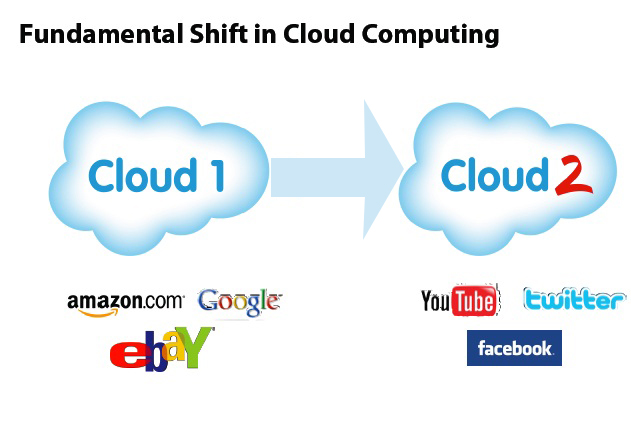
I have to thank Kenny Jones for bringing the following article to my attention. Marc Benioff chairman and CEO of salesforce.com message to 60 CIOs in various meetings throughout America’s heartland is:

We are moving from Cloud 1 to Cloud 2, and the iPad is the accelerator….What’s most exciting is that this fundamental transformation—cloud + social + iPad—will inspire a new generation of wildly innovative new apps that will change entire industries.

Moving from Cloud 1 to Cloud 2 doesn’t mean dropping all the functionality of cloud 1 rather it means we add the functionality of Cloud 2 to Cloud 1. It is a  move from typing and clicking to touch and a move from chatting to video.

Is industry listening–time will tell and Benioff suggests that many CIOs may rather retire than change. What can the academy learn from this? We (the academy) are one of the largest industries in North America and we need to heed this message as well.

Read the full article…

To get out of the reactionary rut we have to actually be proactive, but unfortunately, reactive busyness is rewarded. We need to stop reinforcing the incorrect reactive behaviors and start reinforcing the proactive activities that will enable an organization to really move forward.

In the Tech Republic white paper, Get out of the information technology reactionary rut, Robert Bogue points out the paradox of pro-action with the following example:

Team members who are nearly always proactive are seen as unnecessary overhead because they’re not solving the real problems of today. They are sometimes seen as idealists who never seem to be around when problems occur. Conversely someone who is always reacting and not pro actively planning is seen as someone who is working hard but not necessarily working smart. In other words their diligence is rewarded but the fact that it is necessary due to lack of planning is shunned.

To get out of this reactionary rut or trap we need to:

  • Actually be proactive.
  • Stop reinforcing reactive behavior and reinforce proactive activities.

These activities can include:

  • Cutting ourselves some slack – create opportunities to be proactive
  • Scheduling Time to be proactive – start early or get some help
  • Force High Return Activities – prioritizing or building a task list is a simple start.

The bottom line is that when we are proactive we are also in control.

Read the full article…