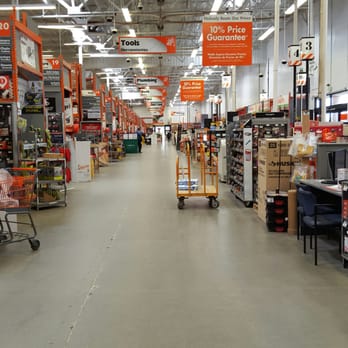
 A recent trip to a Home Depot reminded me of why so many people despise having to find a specific item in a big box store. According to the Home Depot website, my local store had several sets of the rubber leg tips that I needed to replace a worn out tip on our bike repair stand. When I walked into the store I immediately went over to the information desk to ask it they could tell me or direct me to where to find the leg tips. I even had the name and product code so I thought that the person at the desk could at least look it up and tell me what aisle I needed to begin my search. Unfortunately, the best that they could offer is the suggestion that this item could be in the “Tools” or “Hardware” area of the store. Unfortunately, “Tools” spans almost 4 isles and the “Hardware’ section is another set of 3-4 aisles right next to the Tools. As luck would it have the leg tips were on the very last aisle that I walked down and after close to thirty minutes of fruitless searching I determined that the leg tips in the cooler and size that I was hunting for were out of stock—even though the website indicated that they have at least 10 sets.
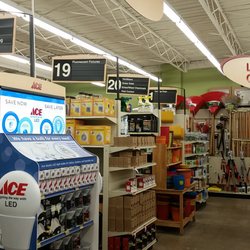 Since I didn’t find what I was looking for at Home Depot and I didn’t want to wait to order the items from Amazon I decided to stop by Ace Hardware the next day. According to the Ace Hardware site, there were at least 6 sets of leg tips in the size I needed in two different stores that were close by. I stopped at the first Ace Hardware and I was only in the store for a couple of seconds when the guy at the help desk said hello and ask me how he could help. I said I was looking for 1.5-inch leg tips and before I could finish explaining that knew that they had to be in stock, he said:
Yup, we have those – go down to isle 28 here on your left and when you turn right into the isle the leg tips will be hanging on the wall just a few feet into the aisle on your right. The size you are looking for should be at the top of the display. You will find both black and white leg tips in that size.
It took me less than 15 seconds to follow his instructions and find the leg tips that I needed and in less than a minute I was back up at the checkout. On the way out of the store, I was thinking to myself that I wouldn’t even bother looking at Home Depot even though they are closer then Ace and usually have lower prices. It just doesn’t make sense for them to make it so hard to do business with me by making it so hard to find what I was looking for. In contrast, Ace helped me to find what I needed by giving me very specific direction and guidance. Both stores have clearly marked aisles and are very well organized the difference is that the Ace people created a context or a guideline for me to find what I was looking for.
Are you making the same mistake as Home Depot on your blog or website? Are you expecting your user to find what they are looking for without creating a context or providing the necessary guidance to find your valuable information? A well-built landing page, context page, or organizational summary for a section on your site can go a long way to help your user to find all your valuable information. Just pointing them to your main page and expecting them to find everything by looking at your menu often isn’t enough. If you a have a major section on your site that has lots of parts then create a page that will provide a context and help guide you the user to the information that they may be looking for. Don’t make your user work so hard to find what they are looking for.
If you think about my Home Depot vs Ace Hardware experience, I am choosing to go with the company that didn’t make it hard for me to find what I was looking for. The Ace people guided me directly to where I needed to go and as a result, they will have my future business. There are fewer options when it comes to buying hardware so I imagine I may find myself at Home Depot again but on the Internet, there are so many more options when it comes to information. If you make it hard for your user to find what they are looking for on your site—chances are they won’t hang around for very long and they won’t be back.


Source: https://s-media-cache-ak0.pinimg.com/736x/4b/80/9e/4b809e7bf3d048ba8f61eef6889fcaaf.jpg
This image would be much more humorous if it wasn’t for the fact that this is an unfortunate and accurate representation of what is happening in our educational systems. Because we have been focusing on the technology and not the learning and have been attempting to gauge the effectiveness of applying today’s technology based on yesterday’s standards we are going nowhere in a hurry. Papert (1993) likened this to:
Attaching a jet engine to an old-fashioned wagon to see whether it will help the horses. Most probably it would frighten the animals and shake the wagon to pieces, “proving” that the jet technology is actually harmful to transportation. (p. 29)
Most people would chuckle at Papert’s example and ask how can anyone or any group be so naive or foolish? Yet, by trying to improve our passive traditional teacher-centered pedagogy with the application or addition of technology, we have essentially strapped a technological jet engine to our classrooms. Perhaps we should be pleased that we are at least not harming the animals (the teachers and students) and haven’t shaken our classrooms (the wagons) into pieces as the ‘no significant difference’ test results would show.
Unfortunately, we have the tendency to make similar mistakes when it comes to curriculum planning and instructional design. We all too often look to the content to be covered, update our terminology to reflect the current trends (individualized instruction, flipped classroom, blended learning, genius hour, 20% time, etc.), and then simply add in some new trendy activities to our well-established routines. We also bolt on some technology for added benefit. In minutes you have a new lesson plan, unit plan, or course plan. If you are fortunate enough to have a text book which chapter headings can be used to structure the content delivery steps—all the better.
However, if you really want to create significant learning environments by giving your learners choice, ownership, and voice through authentic learning opportunities then you have to build your courses and programs differently. You can’t just bolt on new activities to your existing curriculum. You have to look at doing things differently by using the backward design mythologies that require you to start with a big hairy audacious goal (BHAG) which you construct by imagining what your learner will look like, become, or be able to accomplish by the end of the course or units of instruction. I have outlined this process in greater details in the post, 4 Keys to aligning outcomes activities, and assessment.
Be forewarned… this is not going to be an easy process. Leon Festinger (1957) has argued that we seek or strive for psychological consistency and are motivated to reduce the cognitive dissonance that comes from dealing with contradictory information or ideas. It is not uncommon to feel psychologically uncomfortable when we are asked to do things differently than what we are accustomed. We look for ways to conform and align what we are doing with what we believe and if we can’t find this alignment we become uncomfortable. When this happens people will either change their beliefs to align with their actions or change their actions to align with their beliefs.
Fortunately, you get to choose how you are going to deal with this situation. If you are put in a position where you are asked to experiment or apply a different approach to creating your course or other units of instruction you have two choices. You can temporarily suspend your traditional content coverage beliefs about course design and adopt the new course design methodologies at the beginning of the process and then the actions of creating your BHAG and aligning outcomes, activities and assessments will fall into place and your discomfort may be limited or reduced. In contrast, if you maintain your traditional beliefs and choose to focus on content coverage you will find that you will not only be uncomfortable with the new course design process you will also not be able to create a BHAG nor align the outcomes, activities, and assessments that are so important to creating significant learning environments.
If you really want to get the most out of any learning opportunity you have to fight through the cognitive dissonance and experiment with the new ideas and processes to see if they really can make a difference. If you aren’t willing to do this with your course or unit design then you really do run the risk of bolting new more powerful ideas onto an antiquated foundation. Don’t your learner’s deserve more?
References
Festinger, L. (1957). A theory of cognitive dissonance. Stanford, CA: Stanford University Press.
Papert, S. (1993). The children’s machine: Rethinking school in the age of the computer. New York, NY: Basic books.


