
It is very important that you understand the full context of my son’s circumstances to understand the following authentic learning experience that I am about to share. The average home price on the North Shore of Vancouver is around 1.5 million dollars and this is for a very average 1200 square foot house. To put this in context, the 4 bedroom, 3 bath, 3000 square foot house with 10, 12 and 14 foot ceilings, polished concrete floors and an attached 3 car garage on 2 acres of land that we sold for $250,000 when we left Abilene Texas in 2011 would be worth between 4-4.5 million dollars in West Vancouver which is the most prestigious area of the North Shore. As you can imagine rents in this area also extremely high.
When we moved to the North Shore back in 2013 so that my boys could pursue their dreams of becoming professional Down Hill Mountain bike racers we knew we wouldn’t be able to afford to buy a home. While the cost of housing is ridiculous there are other benefits that make living on the North Shore a priority for my boys. In addition to living between 5-15 minutes away from 3 different mountains my boys use for daily training, we are also an hour away from Whistler which has one of the best Down Hill Mountain Bike Parks in the world. Factor in the amazing bike culture that has grown out of the North Shore and Whistler and one could argue that there are few better places in the world where my boys could pursue their dreams.
Unfortunately, Down Hill Mountain Bike racing is a relatively new sport (about 20 years old) and most pro racers do not make much money when compared to other professional athletes. In 2016 Aaron Gwin who is the top racer in the world changed the sport by moving to a new company that was willing to pay him 3 times what his previous company paid him. This massive increase put his annual contract at just under half a million dollars a year. There are only a handful of riders in the world who are making low six-figure salaries so unfortunately, most up and coming pro racers like my boys are lucky to have sponsorships which will help cover the cost of equipment but the cost of travel, racing, training, and living is something that is up to the rider. This explains why my two boys who are 19 and 21 still live at home. Both my boys are extremely independent and even though they live with their parents they have complete freedom and control over all other aspects of their lives. We live in one the most expensive places in North America and they don’t make much money—yet. If we were living anywhere else they would be on their own.
A few months back, neighborhood friends asked if either our boys would be willing to house sit for them and take care of their two full-size dogs when they went to Hawaii for a month. Levi, my older son who was still 20 at the time, jumped at the opportunity to house sit and have his own space for a full month. I managed to control myself and didn’t comment at all on his decision even though I was thinking to myself, I hope Levi realizes just how much work and time walking, exercising and caring for those dogs and that large house is going to take. These people live in a large house at the base of Mount Fromm near the end of a trail that Levi often trains on so I can only image that the proximity to his training was another factor that swayed his decision.
One more bit of context… My boys grew up having choice, ownership, and voice through authentic learning opportunities (COVA) so I saw this opportunity for Levi to have another wonderful way to learn some valuable life lessons — especially when it comes to taking care of other people’s stuff and their animals. My boys didn’t have pets growing up partially because we traveled a fair amount and our lifestyle didn’t really allow for being tied down by animals. When my boys were much younger we often took care of friends cats, dog, gerbils and birds so while my boys didn’t live with animals for years at a time there were times when they were responsible for animals for months at a time so Levi should have known partially what he was getting into. Back to the house and sitting scenario.
About a week into Levi’s house and dog sitting experience when he stopped by to work on his bike, I simply asked him how it was going and he lamented:
…This is taking way more time than I expected…those dogs just won’t leave me alone… I like them but they take so much work… I walk them in the morning before I train… then I come over here to work on my bike… and then I have to go into work and then after work I have to walk them again…
Once again, I managed to control myself and didn’t comment on anything but I did ask if there was anything I could do to help. Levi simply said,
No Dad…I got this.
I knew before Levi had taken on this responsibility that the small freedom that this great house would offer would come at a significant expense of time which Levi just didn’t have. Our garage is equipped as a bike repair shop so I knew Levi would still come home on a daily basis after his training rides to clean and maintain his bike. As a professional athlete, Levi controls his diet very closely and is a creature of habit so I also knew he would be coming home daily to prepare his meals and eat. I knew he would want to use and have access to the Vitamix, the pantry, the freezer and all the food prep resources he was accustomed to. I also knew that his responsibility as the head mechanic and mountain bike instructor at his sponsor Endless Biking would be increasing that same month because Endless was starting to receive their shipments of new bikes for the upcoming season.
So as the days progressed Levi kept coming over earlier and earlier in the morning to make his special shake and then head to the gym which is only a block away. Levi would pop in and out throughout the day between training, working, exercising the dogs and then we wouldn’t see him until the next morning. Our friends came back and on the first night Levi was back at home I told Levi I was proud of how well he handled the responsibility and commended him for going above and beyond what was expected in exercising the dogs. When he said—I am glad this is over… I am never going to do that again… I couldn’t contain myself any longer and started the following short exchange. I had learned over the years that the best way to start a learning moment conversation was to provide a brief context and then ask a question. So I simply stated… Levi, when I was young I too house sat and took care of other people’s dogs like you have so I knew before you took on this responsibility just how much work this was going to be. I am sorry for not telling you about this before. Can you tell me how I might have talked to you or warned you about what you were really taking on. Without hesitation Levi stated— Dad, I wouldn’t have listened… I had to learn this myself. Levi then gave me a big strong hug. I am glad I cared enough to let Levi learn everything he learned completely on his own. Fortunately, this type of life lesson can and does happen in a more formal learning setting.
Over the years, for the most part, I have created significant learning environments (CSLE) where I have given my boys and my students choice, ownership and voice through authentic opportunities (COVA). The reason I said “for the most part” is that giving over control is one of the hardest things a parent or teacher can do. We don’t want our kids to get hurt, or to struggle, or fail or get annoyed with us so we have the tendency to shield them in advance from the consequences of their actions and yet this is where the most significant learning can happen. Giving my boys and my students control over their own learning has been one of the biggest challenges of my personal and professional life.
The life lessons learned through taking full ownership of a learning opportunity cannot be matched by any form of direct instruction or teacher controlled experience. If we care enough for our learners we need to let go of the control and be willing to see them struggle, or fail or even get annoyed with us if we expect them to learn the life lessons that come about through taking full ownership of authentic learning opportunities. Both my boys have learned the value of authentic learning and while they do occasionally get annoyed with me it doesn’t happen much anymore because they have grown to appreciate the value in the struggles of taking ownership of their own learning.
Unfortunately, since many of my students are accustomed to a more traditional form of education which includes giving the teacher or professor what they want and regurgitating information in a simulated project, paper or exam, it is not uncommon to have some of my students annoyed or even angry with me because they feel that I may not be doing my job by not telling them what to do and think. I am willing to have them be annoyed with me because I care enough about their learning to know that if they take ownership and learn by working on something that is authentic then their learning will be transformative. I don’t just let my boys or my learners flounder without any guidance, I do give them guidance and direction through the learning environment that I create or that I point them to through authentic opportunities. The following quote from a recent graduate of the Digital Learning and Leading program where I use the COVA+CSLE approach sums up her experience and the value of this type of learning:
The DLL program shows you where to look, but does not tell you what to see – Brandi Collins
When we let our learners take control of their learning the experiences they can embrace, the meaningful connections they create, and the knowledge that they gain will be life changing. Isn’t this really our primary responsibility as parents and educators?
References
Collins, B. (2017). Highlights from Lamar University Masters program in Educational Technology [Blog]. Retrieved from http://madelinebrandicollins.weebly.com/digital-learning–leading.html
Ventura, M. (1993). Letters at 3am: Reports on endarkenment. Spring Pubns.
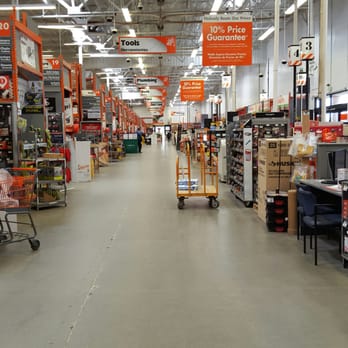 A recent trip to a Home Depot reminded me of why so many people despise having to find a specific item in a big box store. According to the Home Depot website, my local store had several sets of the rubber leg tips that I needed to replace a worn out tip on our bike repair stand. When I walked into the store I immediately went over to the information desk to ask it they could tell me or direct me to where to find the leg tips. I even had the name and product code so I thought that the person at the desk could at least look it up and tell me what aisle I needed to begin my search. Unfortunately, the best that they could offer is the suggestion that this item could be in the “Tools” or “Hardware” area of the store. Unfortunately, “Tools” spans almost 4 isles and the “Hardware’ section is another set of 3-4 aisles right next to the Tools. As luck would it have the leg tips were on the very last aisle that I walked down and after close to thirty minutes of fruitless searching I determined that the leg tips in the cooler and size that I was hunting for were out of stock—even though the website indicated that they have at least 10 sets.
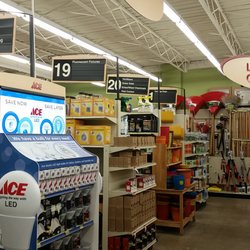 Since I didn’t find what I was looking for at Home Depot and I didn’t want to wait to order the items from Amazon I decided to stop by Ace Hardware the next day. According to the Ace Hardware site, there were at least 6 sets of leg tips in the size I needed in two different stores that were close by. I stopped at the first Ace Hardware and I was only in the store for a couple of seconds when the guy at the help desk said hello and ask me how he could help. I said I was looking for 1.5-inch leg tips and before I could finish explaining that knew that they had to be in stock, he said:
