Archives For Voice
 When educational issues hit the evening news it is very important that you understand how to move past the hype to see what is really happening. The announcement of Chicago Public Schools and nonprofit Leap Innovations receiving a $14 million grant from Chan Zuckerberg Initiative to expand personalized learning to 100 schools is definitely worth investigating. Without fully understanding what personalized learning means within the educational context, on its own merits, it sounds like a great idea. If we look to the recent confession from Larry Berger, CEO of Amplify about what personalized learning actually is. Berger’s company Amplify creates products and curriculum that are supposed to “truly personalize learning” (https://www.amplify.com/curriculum) and since he and his company has spent over a decade using big data algorithms to promote this model, his insider knowledge is useful.
Berger argues that when most people refer to personalized learning they are referring to the engineering model of personalized learning. His explanation of the model is worth repeating verbatim (link to the full confession):
You start with a map of all the things that kids need to learn.
Then you measure the kids so that you can place each kid on the map in just the spot where they know everything behind them, and in front of them is what they should learn next.
Then you assemble a vast library of learning objects and ask an algorithm to sort through it to find the optimal learning object for each kid at that particular moment.
Then you make each kid use the learning object.
Then you measure the kids again. If they have learned what you wanted them to learn, you move them to the next place on the map. If they didn’t learn it, you try something simpler.
If the map, the assessments, and the library were used by millions of kids, then the algorithms would get smarter and smarter, and make better, more personalized choices about which things to put in front of which kids.
I spent a decade believing in this model—the map, the measure, and the library, all powered by big data algorithms.
Here’s the problem: The map doesn’t exist, the measurement is impossible, and we have, collectively, built only 5% of the library.
To be more precise: The map exists for early reading and the quantitative parts of K-8 mathematics, and much promising work on personalized learning has been done in these areas; but the map doesn’t exist for reading comprehension, or writing, or for the more complex areas of mathematical reasoning, or for any area of science or social studies.
If the CEO of one of the leading personalized learning companies is willing to confess that – The map doesn’t exist, the measurement is impossible, and we have, collectively, built only 5% of the library – then perhaps we should listen to him. Especially when he points to the fact that if we really want our kids to learn how to learn then we need to take a look at what “your best teachers and coaches do for you—without the benefit of maps, algorithms, or data—to personalize your learning?”
Chances are these great teachers and coaches created significant learning environments in which they gave you choice, ownership, and voice through authentic learning opportunities. Learning has always been personal because until you take ownership of your own learning by making meaningful connections you do not learn. Effective teachers have always known that learning is the responsibility of the learner and their role was to create the environment in which this could happen.
These types of teachers have always used the latest technology to enhance the learning environment and recognized that technology, big data, and algorithms as simply tools that can be used to help make this happen. Unfortunately, we have the tendency to look to the tools to solve our problems. We need to head the warning or confession of the foremost tool maker and remember that: The map doesn’t exist, the measurement is impossible, and we have, collectively, built only 5% of the library
Instead of looking to technology to solve the personal component of personalized learning we need to look to the great teachers who have been doing personalized learning all along by giving their learners choice, ownership, and voice through authentic learning opportunities. These people have also been using technology in those authentic learning opportunities to help their learner explore, create, collaborate and communicate.
Personalized learning is one of the many educational technology quick fixes that we have a tendency to hope will solve our learning challenges. There are many more ideas, issues, and topics that need clarification and we are looking to you and our Digital Learning and Leading students to join us in exploring these significant issues.
- Consider the following list as a starting point and let us know if you would like to write an article, post or other publication that will bring real clarity to the learning environment:
- Never been a better time to be a learner and/or teacher
- Growth mindset & Grit criticism
- STEM instruction is mostly delivered via lecture
- The much-needed shift to mastery learning
- Personalized learning problems & benefits
- Individualized instruction
- Differentiated instruction
- Additional names for competency-based education
- Why technology isn’t a Quick fix
- Silicon Valley’s failed promises with edtech
- Problems with SAMR and related quick fix methodologies
- Learning styles and related educational Zombie myths (bad ideas that just won’t die)
- Problem-based instruction that isn’t
- Shift from passive to active learning
- Choice
- Ownership
- Voice
- Authentic learning opportunities
- Why all elements of COVA must co-exist
- COVA from a student perspective
- The issue with taking ownership and agency – why folks don’t do this
- Creating significant learning environments
- Future of education
- Connecting the dots – making meaningful connections
- Why – go & show rather than sit & get
- Digital leader vs digital manager
- Design thinking for designed learning
- Confronting the Myth of the ‘Digital Native’
- Decades of evidence…but where is the change? Translating educational research to practice
- 18 years into the 21st century – how are we doing with 21st Century learning
- Communities of Practice (CoP’s) and their impact
- Problems with STEM/STEAM initiatives
- Importance of Learning How to Learn
- Importance of asking good questions vs finding right answers
- Reality of Thorndyke vs. Rhetoric of Dewey – more to be said
- Failing forward
- Feedback to Feedforward
- How to Avoid the Hype/Getting Caught in the whirlwind of day-to-day processes
Please contact either Dr. Thibodeax or myself (Dr. Harapnuik) if you would like to research, write, and publish on one or more of these topics. This list is also just a starting point so if you have other ideas with which you would like to collaborate write, just let us know.

This past Saturday morning when I walked into our living room I couldn’t help noticing the large sheet of black ABS plastic that Caleb, my 19-year-old son, had acquired for his latest project.
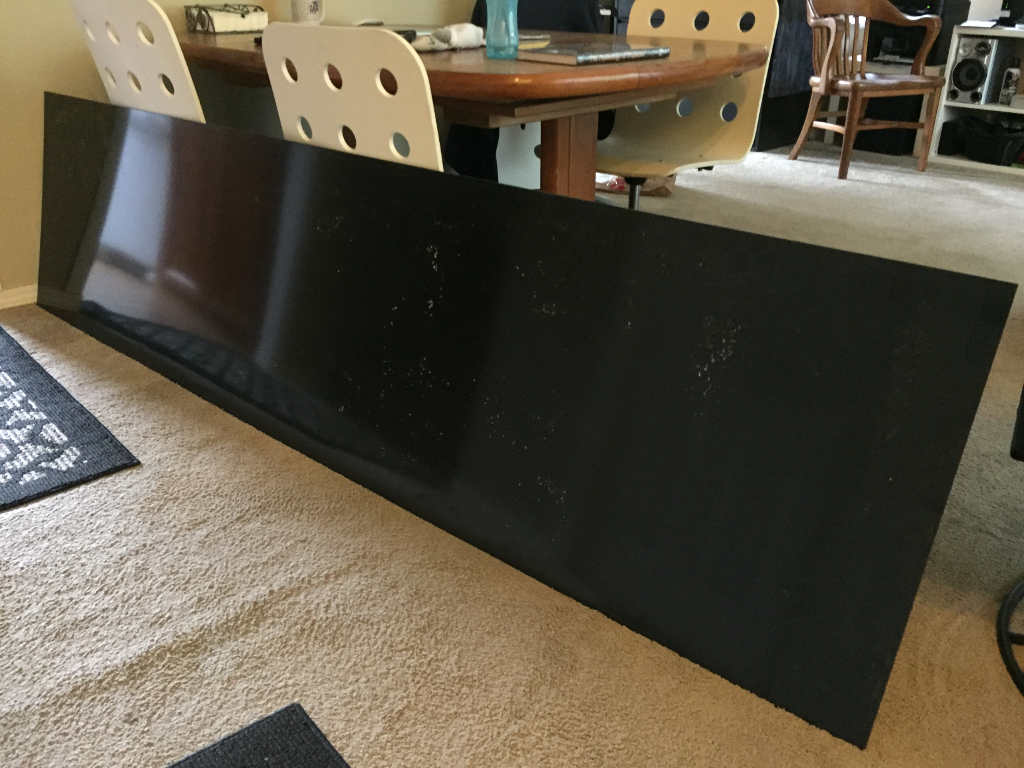
Ever since Caleb was a toddler he has enjoyed creating things that would change and enhance his world. For the most part, he was just like every other young kid who loved playing with Lego and other toys but Caleb and his older brother Levi would migrate away from typical play and look for ways to improve their toys and their environment. Both my boys would use Lego and Kinex and other constructables (what I like to call toys that you can build things with) to make things that they could use for other purposes. Their desires quickly moved beyond using Lego and Kinex to using authentic resources to change their environment. For example, when my older son Levi was three he wanted to be able to pull his wagon with his bike and rather than just use a rope he wanted my help to rig up a hitch system which we created and he used and then passed onto his younger brother. Caleb was equally industrious and I have so many fond memories of heading down to the hardware store to gather the items my boys needed for their latest projects.
So when I saw the big piece of plastic I reminisced about Caleb’s passion for making things. I also thought about how my wife and I carefully nurtured and helped him and his brother develop their interests and created the environment in which they could fully develop their creative abilities and learn how to learn. If there was just one thing that I can point to that really made the difference it would have to be the use of authentic projects. While we didn’t deny our boys models, Lego, Knex and other constructables we also encouraged them to explore working on authentic projects. My boys were always working on something that was real and that would make an authentic difference in their world.
The bike hitch, bike ramps, countless other smaller projects, and the major fort project were just the starting point for exposing my boys to authentic learning. When I purchased and renovated a rental property the boys who were just 8 and 10 worked alongside me at every stage from cleaning up the junk in the yard to demolishing the basement rooms, to building new rooms and doing all the work that was necessary to bring the house into a state where it could be rented and then sold. Later that spring when the boys were still just 8 and 10 they planned out all the details of our month-long summer bike trip which included everything from getting the maps from the AMA, planning the route, to identifying what we could do along the trip to, where we would stay, and what we could do when we got to the interior of British Columbia. They put together a detailed binder that had all the information we would need. That first major biking holiday is still one of the most talked about trips that my boys will reminisce about. As professional DownHill Mountain bike racers and extreme athletes Levi and Caleb travel continuously so this early experience has served them well. The have spent the majority of their short lives working on authentic projects that not only enhance their lives but lives around them.
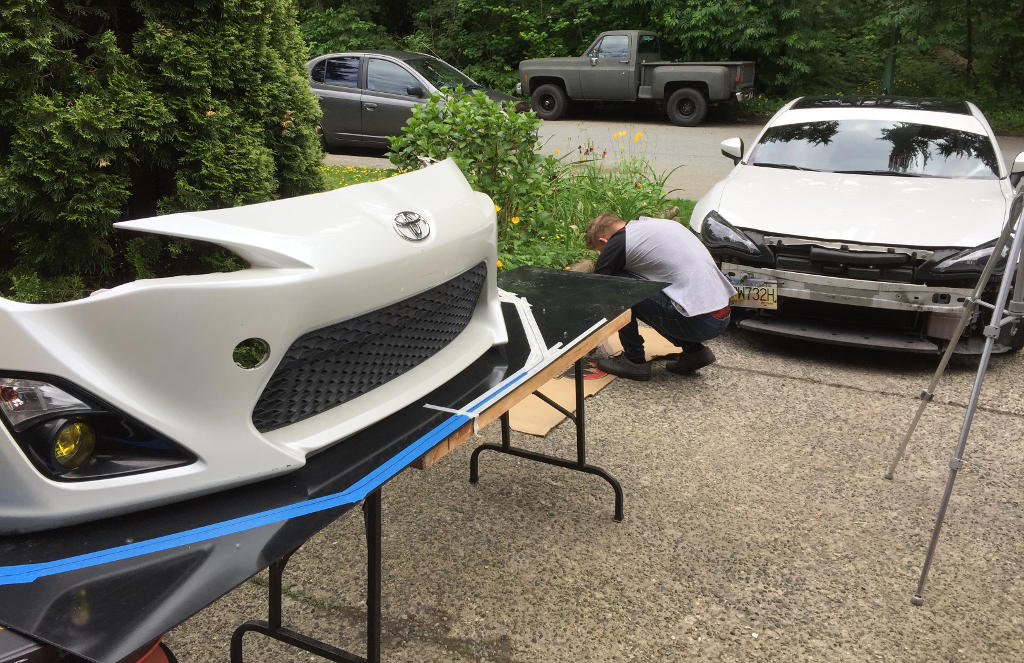
Authentic projects work because they not only give the learner choice and ownership over the world that they live in but they also give the learner the ability to find and use their voice and show the world what they have created. Caleb’s projects are getting very sophisticated and while the air splitter he created for his high-end sports car is not a project you would ask a novice to undertake Caleb is able to create a professional quality enhancement and add significant value to his car because he has lived a life filled with authentic projects.

The cognitive and analytic processes of prediction, modeling, experimentation, diagnosis, and problem-solving that Caleb experiences through his countless authentic projects has also contributed to his desire to take on in bigger and bigger challenges. I enjoy helping Caleb with his projects because his passion for learning and creation are contagious.
In our typical education rhetoric we talk about engagement, individualized instruction, and life-long learning but the reality of standardized testing or, if our learners are lucky, the occasional analysis of case-based studies offers our learners very little motivation for learning in the present, so how can we expect them to be excited about learning in the future. We can change this. But that means we have to give back control of the learning to the learner. We need to allow our learners to choose and work on authentic projects that will inspire their intrinsic passions for learning and help them grow their learner’s mindset. When we do this for our learners the possibilities of what they will be able to do are virtually limitless.

Additional thoughts on Authentic Learning:
- In Pursuit of the Better Way: The Learners Mindset
- Why Good Ideas Too Often Go Bad
- Mapping Your Learner’s Journey
- Ed Tech Projects Fail When the Focus is Technology rather than Learning
- Difference Between “Doing Projects” and “Project-Based Learning”
- Learning by playing, tinkering and making (The Learner’s Way blog of Nigel Coutts)
My boys are competitive Down Hill Mountain bike racers and they recently raced in several events at Whistler Crankworx. This meant that they had several practices, qualifiers, and final races that ran very close together and had to incorporate protein and energy bars into their nutritional plans to get them through their hectic schedule over the week of racing. High quality protein and complex carbohydrates packed into a portable bar are not just a convenience for my sons, they are a necessity if they wish to stay fully fuelled and competitive. Slipping a couple of these small energy packed bars into a jersey or shorts pocket means my boys can quickly and easily maintain their nutritional needs for the hectic training and/or racing session.
A quality protein and energy bar has little or no sugar, uses natural ingredients, and has a balance of protein and complex carbohydrate to help an athlete maintain their energy when they are unable to access whole foods. Bars that are nutritionally high quality often don’t taste the greatest because the manufacturers stay true to the purpose of helping to fuel a competitive athlete. Unfortunately, as protein and energy bars get more and more popular quality bars are getting harder and harder to find because too many manufacturers are willing to move away from the fundamental purpose of the bars and focus primarily on the taste of the bars at the expense of the nutritional quality.
When you focus on the taste and not the nutritional needs of an athlete you end up with something that sounds like it would be a good thing, but when you look at the details you find it’s not the case. The list of ingredients on the following popular protein and energy bar reveals that taste and not nutrition is their priority:

Evaporated cane juice syrup and corn maltodextrin are the first and third listed ingredients which also indicates their quantities. While neither of these ingredients are listed as sugar they are essentially the same as sugar hiding behind a more natural name. The more diligent athlete who is aware of the sugar synonyms won’t be tricked by the manufacturer and will look for a better bar, but for the average person who isn’t as informed this fake protein and energy bar is really not much better then a typical candy bar. At least in the candy bar the manufacturers don’t try to hide the actual ingredients behind more natural sounding names:

What makes this really serious is that the majority of protein and energy bars are really not much better or different then candy bars when you look at the first three ingredients:
Protein bar – Evaporated cane juice syrup oat bran, corn maltodextrin and soy protein isolate
Candy bar – Sugar, peanuts, and corn syrup
Yes the protein bar does have a few better ingredients, it does have soy isolate protein powder, but for the most part it is just a candy bar with added protein. This is very alarming and in the display pictured below there are a couple of dozen different types of bars and there were only two that were actually healthy enough to be used by a competitive athlete:

How does such a good idea, a portable highly nutritious bar that a competitive athlete can use to stay energized, go from good to bad. Simply shift the primary purpose from a portable highly nutritious bar used by competitive athletes for fuel to a good tasting convenience snack used by anyone. Most competitive athletes are willing to deal with the lack of flavour and even a chalky texture in their bars because they know that it isn’t about the taste it is about the fuel that they need to stay competitive.
This shift in purpose from fuel to taste has as a dramatic effect on an individuals results as a shift from a focus on learning to technology has on the learner.
We can run into a similar problem in education when we shift our focus from the learning to the technology. In his post How to Fake a 21st Century Classroom Terry Heick satirically posits how to:
“fake 21st century thinking and learning environment to make the right kind of impression with the right people, and give the appearance of forward-thinking.”
Useful ideas like Project-Based learning, 1 to 1, and blended learning can all too easily loose their benefit when we shift the focus from learning and just do projects, just focus on the devices, and just focus on the content delivery part of the blended learning. Heick points to ten good learning ideas that can easily go bad for the learner if we shift our focus from the learning to the technology or to what appears to be a trendy 21st Century activity. His post How to Fake a 21st Century Classroom Terry Heick is worth the read but I must caution you that you may be bothered or convicted by a few convenient or fake activities that you may have fallen into. I know I am taking a hard look at several of my activities as a result of reading his post.
As educators, our responsibility is to know better, to know that you can’t fake Project-Based learning by doing make work or fake projects. You have to give the learner the control, ownership and voice over an authentic project that will make some sort of difference in the learner’s personal life or community. You can’t just fake 1 to 1 by making students do digital worksheets on their iPads. You have to give the learner the opportunity to use their devices for creation, collaboration and communication and enable them to learn all the time and everywhere with everyone. You can’t just fake blended learning by focusing on the content. The emphasis on creation, collaboration and communication in your blended learning environment will also enable your learners to go much deeper then they would if you were to focus on the delivery of content.
As educators we should know better but just like the average person who is swayed by the appearance, convenience and taste of the fake protein bars we too often can be swayed by wanting to give the right kind of impression and the appearance of forward-thinking.
We can also be swayed by the fact that we may be faking it until we make it; meaning that we may move toward our learning goals by implementing changes incrementally and may use that worksheet on the iPad as a transition activity until we can focus on more genuine activities. This is understandable and as long as the transition happens this will be fine. But just like the fake protein bars that will work when you don’t have anything else available, temporary or transition use of technology can also work, but also like the fake protein bars long term use would not be heathy for the athlete or the learner.


